

Get Construction Fall Injury Lawsuit Help
Falls from scaffolds, ladders, and elevated roof work remain a leading cause of catastrophic injuries and fatalities on construction sites and industrial workplaces.
While workers’ compensation may cover basic benefits, serious cases often involve third‑party negligence (e.g., general contractors, property owners, subcontractors) and/or product liability (defective scaffolds, ladders, anchors, PFAS, roof hatches, or fall‑protection equipment).
Identifying and preserving these fault avenues can be the difference between limited benefits and full civil recovery for lifelong harms.

How Much Is Your Case Worth?
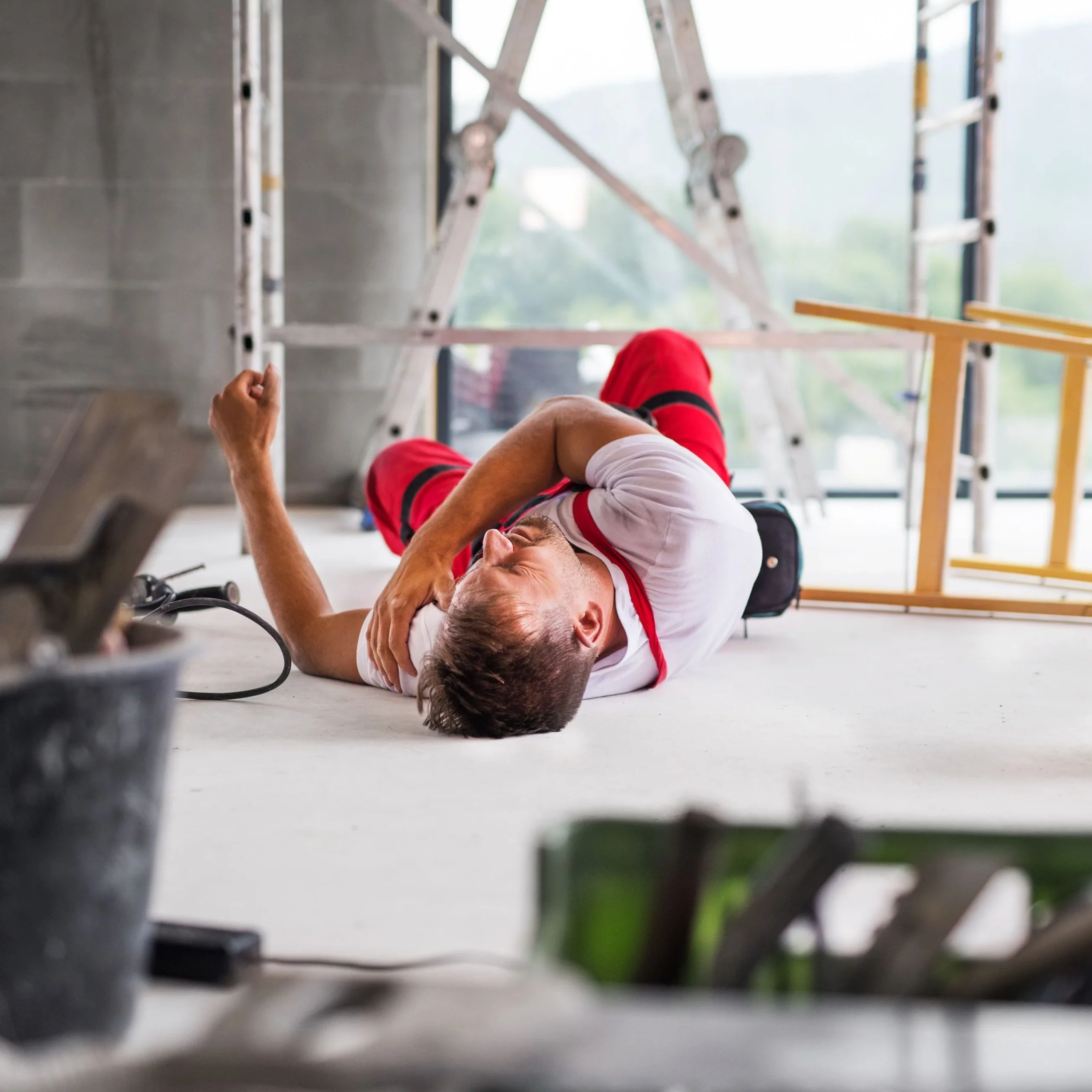
How these falls usually happen
- Unprotected edges or skylights: No guardrail or cover; a skylight that looks “walkable” but isn’t.
- Shaky or incorrect scaffolds: Parts missing, not tied in, or overloaded.
- Ladder problems: Wrong angle, slippery feet, bad floor, damaged rungs/rails.
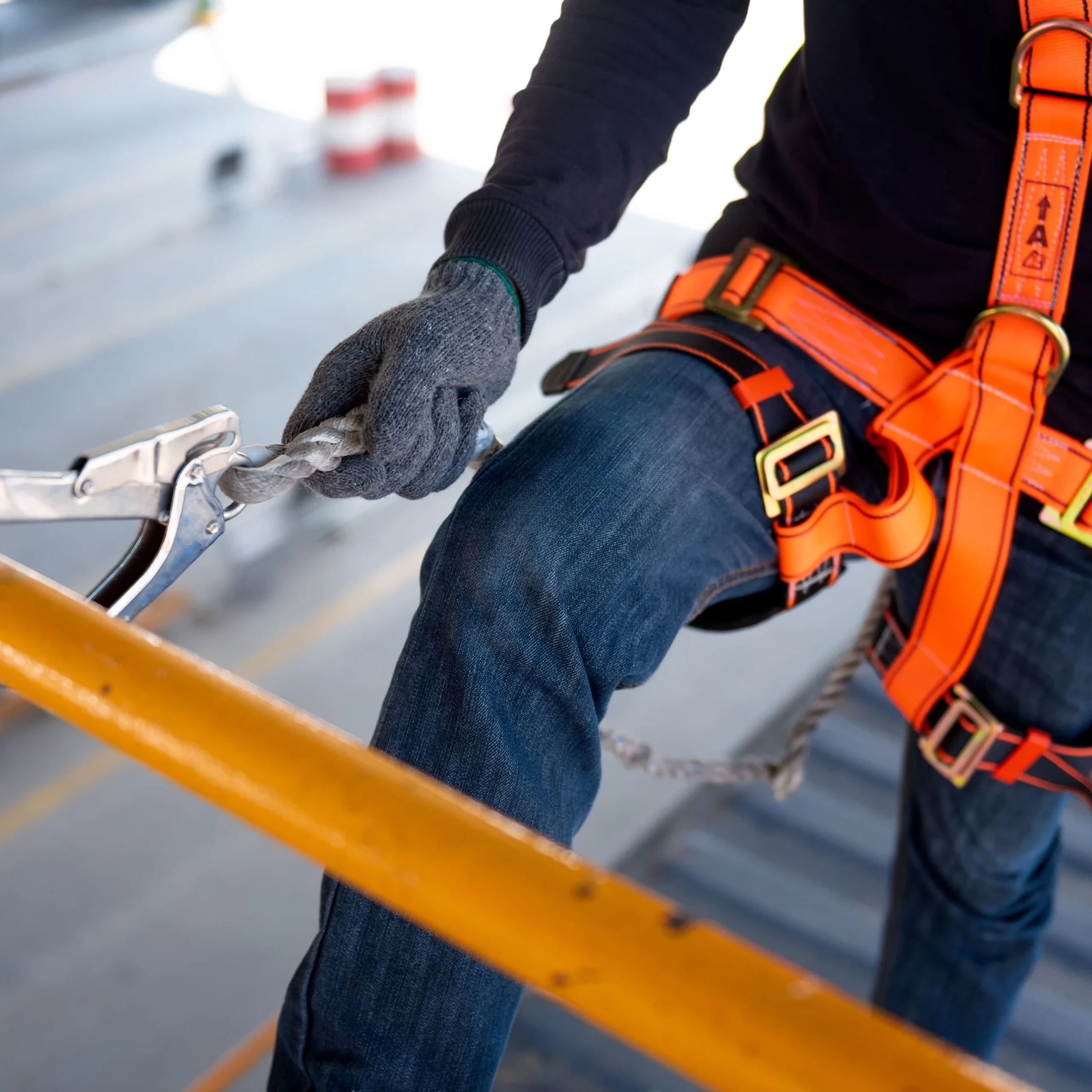
- Gear failure: Harness, lanyard, or self‑retracting lifeline (SRL) that doesn’t catch; no safe place to clip in.
- Open roof hatches or poor setup: Openings left uncovered or guardrails removed.
Claim Strategy
When someone falls at work (scaffold, ladder, roof), there are two main ways to hold others financially responsible in addition to workers’ comp:
Third‑Party Negligence (beyond workers’ comp)
Idea: A company that controlled the jobsite or created a hazard failed to keep things safe.
Who this might be:
- General contractor or construction manager: They run the site and must plan for fall protection (guardrails, covers, tie-off points) and make sure everyone follows the rules.
- Property owner/building manager: They must keep the area reasonably safe (e.g., mark fragile skylights, guard roof hatches, provide safe access).
- Other subcontractors/trades: Another crew might remove a guardrail, move an anchor, leave debris that makes a ladder slip, or otherwise create a hazard.
- Maintenance/rental vendors: If a scaffold, swing stage, or hoist was assembled or inspected poorly by a third party.
Simple example: The GC removes guardrails so a delivery can pass and doesn’t put them back. You step back and fall. That’s likely on the GC.
Product Liability (defects & warnings)
Idea: A piece of equipment failed because it was badly designed, badly made, or poorly labeled/instructed and that caused the fall.
What this might involve:
- Design defects: A ladder that tends to slide out even when set correctly; scaffold parts that can come loose; a lifeline that doesn’t catch reliably; anchors not strong enough for a fall.
- Manufacturing defects: A cracked weld, weak metal, wrong materials, or a faulty batch.
- Warnings/instructions problems: Missing or unclear instructions (e.g., proper ladder angle, how to tie off, where anchors can safely be used); not warning that a skylight isn’t walkable.
- Warranty breaches: The product wasn’t fit for normal jobsite use as promised.
Simple example: Your harness and lifeline are set up correctly, but the self-retracting lifeline doesn’t lock when you fall. That points to a defective product claim against the manufacturer.
What We Have To Show
Another company was careless (third-party negligence):
- They controlled the area or created the hazard (GC/site manager/other trade/rental or maintenance vendor). They failed to take basic safety steps (guardrails/covers/tie-off options, safe access/housekeeping, proper assembly/inspection).
The property was unsafe (premises liability):
- A dangerous condition existed (unmarked skylight, open hatch, unprotected edge, slippery surface). The owner/manager knew or should have known. They didn’t fix it or warn, and it led to your injury.
A safety rule was broken (negligence per se):
- A safety rule applied (e.g., covers/guardrails required, proper ladder setup, fall-protection requirements). The rule was violated. The violation contributed to the fall.
A product was unsafe (strict product liability). The product was defective when sold:
- Design (tends to slide, too weak, locks don’t engage), Manufacture (cracked welds, bad materials), or Warnings/Instructions (unclear, missing, or misleading). You used it in a normal/expected way. The defect caused your injury.
The product didn’t live up to its promises (breach of warranty):
- The company promised it was fit/safe for the job (labels, specs, brochures). In real-world use, it wasn’t. That shortfall resulted in your injury.
Learn More

Warehouse Crush Injuries: Severe Limb Damage and Amputations
A warehouse crush injury happens when a forklift, machine, trailer, collapsing load, or other heavy equipment traps an arm, leg, hand, or foot; the resulting force can destroy bone, muscle, blood vessels, nerves, and skin. What begins as a workplace…
Traumatic Brain Injuries (TBI), Paralysis, and Wrongful Death Caused by Warehouse Falls
Warehouse workers have suffered permanent brain damage, paralysis, or death within seconds of a fall from a storage rack, mezzanine, ladder, loading dock, or raised pallet. A worker may strike a concrete floor, shelving, machinery, or stored materials with enough…
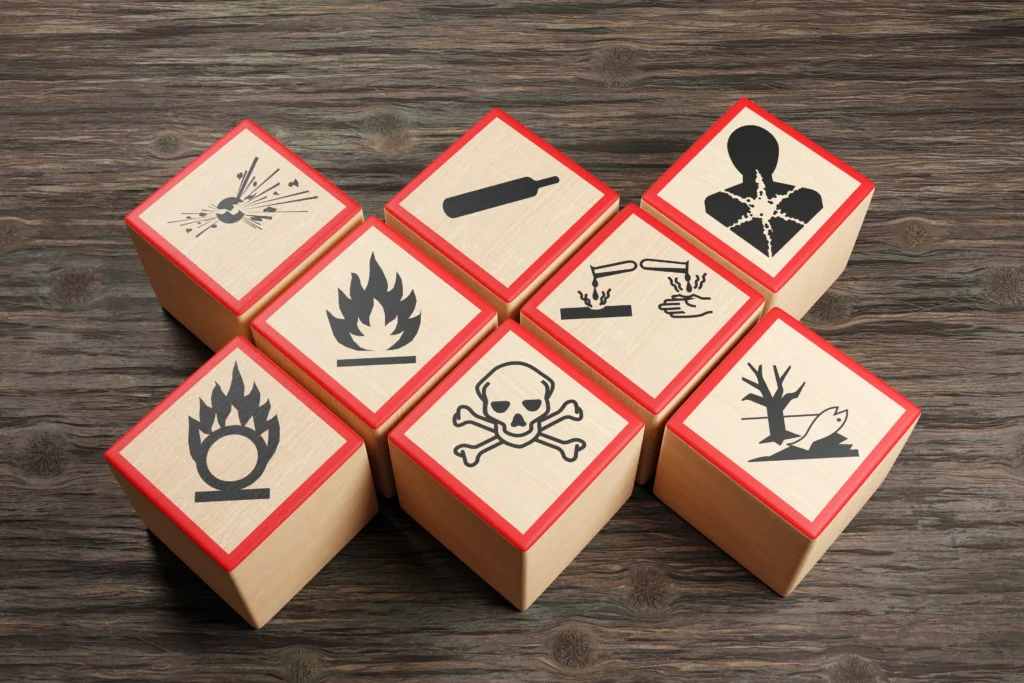
Toxic Exposure Claims: Identifying the Right Liability Theory
Toxic exposures can cause life-altering injuries. The source may be a defective product, an unsafe workplace, a leaking facility, a mislabeled container, or a chemical release that reaches homes, schools, or nearby businesses. The legal claim depends on where the…
FELA vs. Worker’s Comp: What Qualifies as an FELA Claim?
One of the most important questions in a railroad injury case is whether the claim belongs under a state’s workers’ compensation law or the Federal Employers’ Liability Act (FELA). he answer to this question can have a dramatic impact on…
Corporate Negligence in Trucking: When Company Decisions Cause Safety Issues
Families traveling on the highway may not realize that the commercial trucks driving beside them are not always operated by safe or even easily identifiable companies. Often, that only becomes clear after a serious crash, when victims and their families…

Two Construction Workers Killed in Route 30 Work Zone Crash in Chester County
Two construction workers were killed while setting up a traffic pattern on Route 30 in Chester County, according to Pennsylvania State Police. The fatal crash reportedly involved a tractor-trailer and multiple vehicles in an active construction zone. What happened in…