

Missed CSF leaks can cause devastating injuries. We hold negligent medical providers accountable.
Patients have suffered serious harm after cerebrospinal fluid leaks following surgery, spinal procedures, trauma care, and other medical treatment. These leaks can lead to severe headaches, repeat hospitalization, infection, meningitis, neurological injury, additional procedures, or death.
Medical literature recognizes CSF leaks as known complications of skull base surgery, spine surgery, trauma-related procedures, and lumbar punctures.
If you or someone you love developed a CSF leak after medical care, the central question is whether a preventable surgical error, delayed diagnosis, or failure to treat played a role.


How Much Is Your Case Worth?
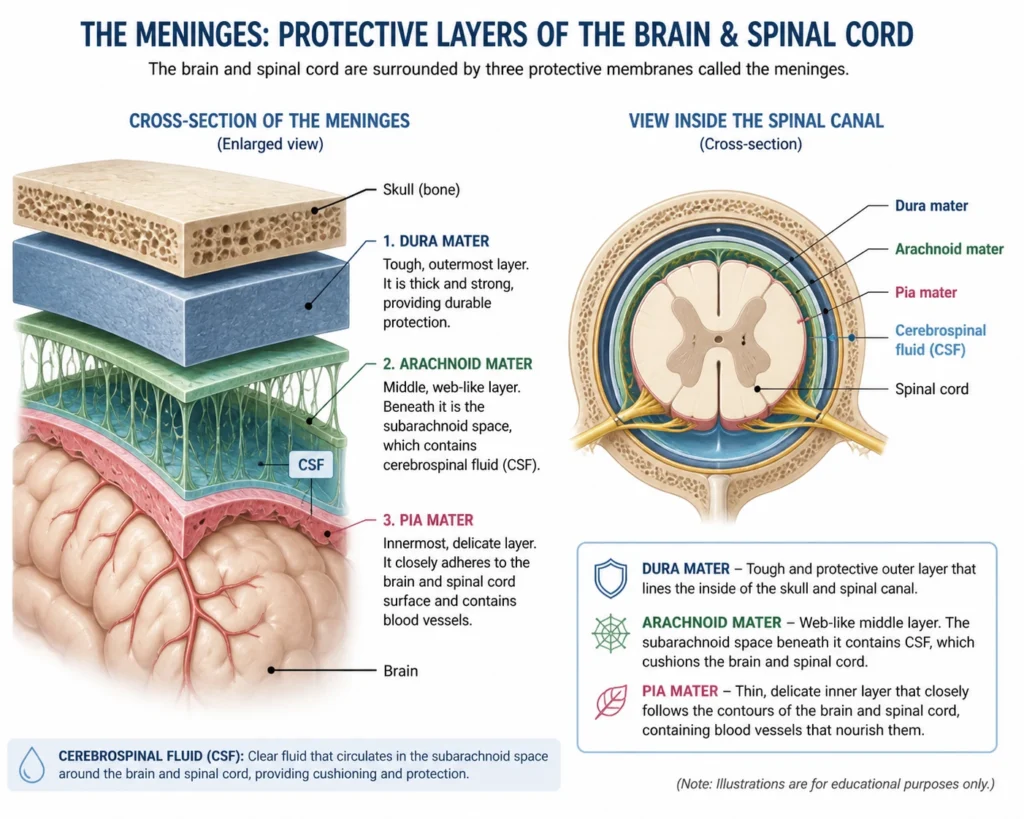
What Is a Cerebrospinal Fluid Leak?
Cerebrospinal fluid, often called CSF, is the clear fluid that surrounds and protects the brain and spinal cord. A CSF leak occurs when there is a tear, puncture, or defect in the dura, the protective membrane that contains this fluid.
A CSF leak can occur in the skull or spine. Cranial CSF leaks may cause clear fluid drainage from the nose or ear. Spinal CSF leaks often cause severe headaches that worsen when standing and improve when lying down.
Some CSF leaks are recognized complications of medical care. That does not mean every leak is malpractice. A legal claim may exist when the leak was caused by a negligent technique, not recognized in time, not properly repaired, or followed by preventable complications because providers failed to act on warning signs.
How CSF Leaks Can Happen During Medical Care
CSF leaks can occur after several types of medical treatment, including:
Brain, Sinus, and Skull Base Surgery
Procedures involving the skull base, brain, sinuses, or ear structures can create a pathway for CSF to escape if the dura or skull base is injured. These cases may involve neurosurgeons, ear nose and throat surgeons, hospital teams, or surgical centers.
Spine Surgery
CSF leaks can occur during cervical, thoracic, or lumbar spine surgery if the dura is torn or punctured. These cases may involve procedures for disc herniation, spinal stenosis, fusion, decompression, tumor removal, or revision spine surgery.
Lumbar Punctures and Spinal Procedures
A CSF leak can occur after a lumbar puncture, epidural injection, spinal anesthesia, myelogram, or other procedure involving the spinal canal. Some leaks resolve with conservative care, but others require more aggressive treatment.
Trauma Care and Emergency Treatment
Patients treated after head trauma, spine trauma, facial fractures, skull fractures, or complex injuries may develop CSF leaks. In these cases, the issue may be whether providers recognized the leak, ordered appropriate testing, involved specialists, and monitored the patient for infection or neurological decline.

Symptoms After Surgery or a Procedure
CSF leak symptoms can be mistaken for ordinary postoperative pain, sinus drainage, migraine, dehydration, medication side effects, or recovery discomfort.
Common symptoms may include:
- Severe headache
- Headache that improves when lying down
- Clear fluid draining from the nose or ear
- Neck pain or stiffness
- Nausea or vomiting
- Dizziness or balance problems
- Ringing in the ears
- Hearing changes
- Blurred or double vision
- Sensitivity to light
- Worsening pain after standing, coughing, or straining
- Fever, confusion, or other signs of infection
These symptoms require careful attention after surgery or spinal procedures. When providers dismiss clear warning signs or fail to investigate them, a patient may lose critical time.

Why a Missed CSF Leak Can Be Dangerous
A CSF leak can create a serious risk because it may open a pathway for bacteria to enter the central nervous system and areas where bacteria can enter.
A missed or untreated CSF leak may lead to:
- Bacterial meningitis
- Serious infection
- Brain or spinal complications
- Repeat hospitalization
- Additional surgery
- Long-term neurological symptoms
- Chronic pain
- Permanent injury
- Death
The danger often comes from delay. A patient may report severe headaches, clear drainage, fever, neck stiffness, or neurological symptoms, but the care team may fail to connect those symptoms to a possible CSF leak.
When a CSF Leak May Involve Medical Malpractice
A CSF leak claim depends on the facts. A bad outcome alone does not prove malpractice. The legal question is whether the medical team failed to meet the accepted standard of care and whether that failure caused harm.
A CSF leak malpractice investigation may focus on whether providers:
- Caused a dural tear or puncture through improper technique
- Failed to recognize a CSF leak during surgery
- Failed to repair a known leak before closing
- Failed to document an intraoperative complication
- Ignored postoperative symptoms consistent with a CSF leak
- Discharged the patient too soon
- Failed to order appropriate imaging or testing
- Failed to involve neurology, neurosurgery, ENT, infectious disease, or other specialists
- Delayed repair or treatment
- Failed to warn the patient about symptoms that required urgent care
- Failed to diagnose meningitis or infection in time
These cases often involve both the original procedure and the postoperative response. A preventable leak may cause harm, but a delayed diagnosis can make that harm much worse.

Delayed Diagnosis of a CSF Leak
A delayed diagnosis can turn a potentially manageable complication into a life-changing injury. Providers may fail to recognize that a patient’s symptoms are not part of ordinary recovery.
Delay may occur when medical providers:
- Treat a positional headache as a routine migraine
- Treat clear nasal drainage as allergies or a sinus issue
- Dismiss symptoms after spine surgery as ordinary postoperative pain
- Fail to consider CSF leak after known dural injury
- Fail to test suspicious drainage
- Fail to order imaging when symptoms continue
- Fail to escalate care after fever, neck stiffness, confusion, or neurological symptoms
The longer a leak remains untreated, the greater the risk that the patient will suffer serious complications.
Evidence That May Matter in a CSF Leak Claim
Important evidence may include:
- Operative reports
- Anesthesia records
- Nursing notes
- Postoperative progress notes
- Discharge instructions
- Emergency department records
- Imaging studies
- Lab results
- Fluid testing
- Specialist consultations
- Infection workups
- Medication records
- Follow-up appointment notes
- Patient portal messages
- Calls to the surgeon or hospital
- Records from repeat hospitalization or corrective surgery
The timeline matters. A strong investigation reconstructs when the leak likely began, when warning signs appeared, when the care team had notice, and what should have happened next.
Who May Be Responsible for a CSF Leak Injury?
Responsibility depends on where the error occurred and who controlled the patient’s care. Potentially responsible parties may include:
Surgeons
A surgeon may be responsible if the leak resulted from negligent technique, failure to recognize a dural tear, failure to repair the leak, or failure to respond appropriately after surgery.
Hospitals and Surgical Centers
A hospital or surgical center may be responsible when nursing staff, policies, communication failures, discharge procedures, or postoperative monitoring contributed to delayed diagnosis or harm.
Emergency Department Providers
Emergency providers may be responsible if a patient returned with symptoms of a CSF leak or meningitis and the warning signs were missed.
Specialists and Follow-Up Providers
Neurologists, neurosurgeons, ENT physicians, infectious disease specialists, radiologists, and other providers may be involved depending on the symptoms, testing, and care decisions.
CSF leak cases often involve more than one provider. The claim may require close review of each provider’s role in the patient’s injury.

What Damages May Be Involved in a CSF Leak Case?
Depending on the facts, a claim may involve damages related to:
- Emergency care
- Repeat hospitalization
- Additional surgery or procedures
- Infection treatment
- Neurological care
- Rehabilitation
- Lost income
- Reduced earning capacity
- Pain and suffering
- Long-term disability
- Permanent neurological injury
- Wrongful death
Every case depends on the patient’s outcome, the medical evidence, and whether negligence caused or worsened the injury.

CSF Leak Wrongful Death Claims
A CSF leak can become fatal when it leads to meningitis, severe infection, neurological injury, or delayed treatment of a serious complication.
A wrongful death investigation may focus on whether providers recognized infection, responded to neurological changes, ordered appropriate testing, escalated care, and treated the leak or infection in time.
When to Speak to a Lawyer
A CSF leak after surgery or medical treatment can leave patients and families with urgent questions. You may be unsure whether the leak was preventable, whether warning signs were missed, and whether delayed treatment caused additional harm.
McEldrew Purtell investigates serious medical and surgical error cases involving CSF leaks, meningitis, neurological injury, repeat procedures, and wrongful death. Contact us today for a free consultation. We can review what happened, explain the legal issues, and help you understand whether you may have a claim.
Learn More

NICU Monitoring Failures: Delayed Response to Apnea, Bradycardia, and Oxygen Desaturation
Apnea, bradycardia, and oxygen desaturation are common in neonatal intensive care, particularly among premature infants. Some events resolve without treatment. Others require stimulation, supplemental oxygen, respiratory support, medication, or more advanced intervention depending on the baby’s condition. A poor outcome…

Surgical Stapler Failures: Internal Bleeding, Sepsis, and Wrongful Death
Patients can suffer life-threatening internal bleeding, leaks, infection, or sepsis when a surgical stapler fails to create a complete and secure staple line. These complications may require emergency surgery, prolonged hospitalization, or intensive care, and in the most serious cases…

Pacemaker and ICD Failures: When a Cardiac Device Fails
Patients who rely on a pacemaker or an implantable cardioverter-defibrillator are trusting that device to work. When a pacemaker fails to deliver needed electrical impulses or an ICD fails to detect a dangerous rhythm or deliver an effective shock, the…

Neonatal Sepsis and Meningitis: Delayed Treatment and Brain Injury
Newborn sepsis and meningitis develop when bacteria or other pathogens enter a newborn’s bloodstream or central nervous system during or after birth and can cause seizures, brain injury, organ failure, and death when not recognized and treated quickly. These infections…

Ascension Saint Thomas Midtown Medication Error Harms Four Surgery Patients, One Reportedly Left Paralyzed
A 72-year-old woman who entered a Nashville hospital for a routine knee replacement was reportedly left paralyzed from the chest down after receiving the wrong medication. She was one of four joint replacement patients affected by a pharmacy medication error…

Cerebrospinal Fluid Leaks Can Cause Serious Neurologic Injuries and Life-Threatening Infections
When a dural injury results in Cerebrospinal Fluid leak after an epidural injection, lumbar puncture, spinal cord stimulator insertion, spine procedure, or another intervention near the dura, the consequences can be debilitating and life-threatening. Patients may suffer severe migraines, brain…