Two Construction Workers Killed in Route 30 Work Zone Crash in Chester County
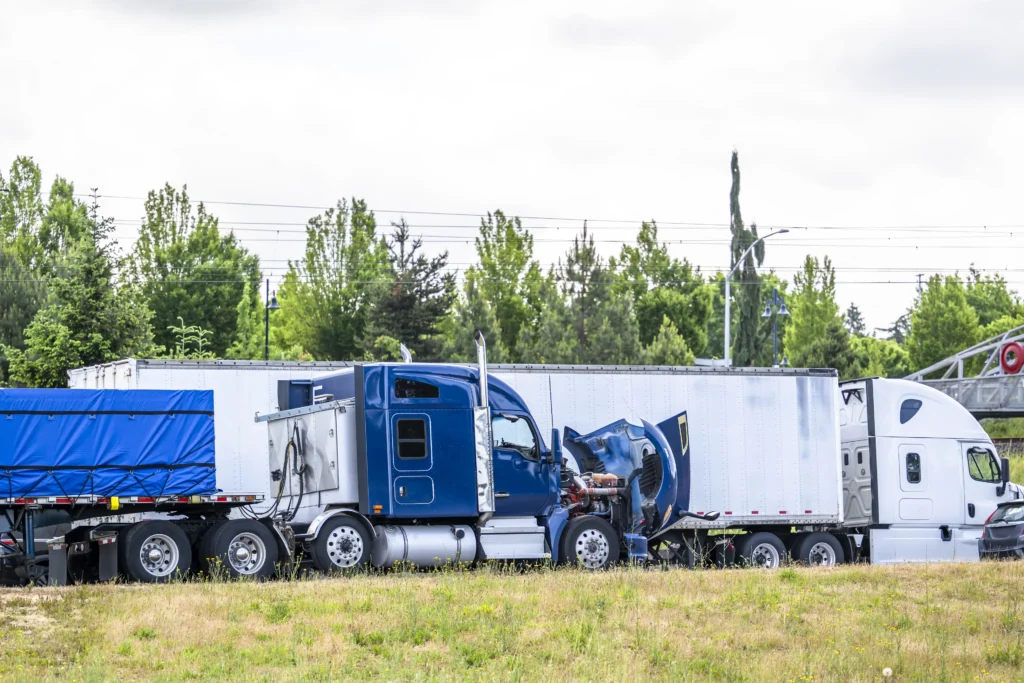
Two construction workers were killed while setting up a traffic pattern on Route 30 in Chester County, according to Pennsylvania State Police. The fatal crash reportedly involved a tractor-trailer and multiple vehicles in an active construction zone.
What happened in the Route 30 work zone crash?
According to FOX 29 reporting, the crash happened Monday evening, May 18, 2026, on U.S. Route 30 eastbound in Valley Township, near mile marker 270.3. Police reportedly said a tractor-trailer caused a multi-vehicle crash while two construction workers were setting up a traffic pattern. Both workers died at the scene. Two other people were hospitalized with injuries described as non-life-threatening. The investigation remains active.
Why fatal work zone crashes require a broader investigation
A fatal work zone crash is not just a traffic accident. It is also a workplace death, a roadway safety event, and potentially a trucking liability case.
Road construction workers face danger from vehicles traveling through or near active job sites. OSHA states that highway, road, street, bridge, tunnel, utility, and other infrastructure workers are exposed to hazards from outside and inside the work zone, including struck-by hazards. OSHA also points to the Manual on Uniform Traffic Control Devices for guidance on work zone signs, barricades, flagging, and related traffic control measures.
That matters because a safe work zone depends on multiple layers of protection. Those layers may include advance warning signs, lane closures, cones, barriers, flaggers, lighting, reduced speeds, proper truck routing, and internal traffic control plans. When a tractor-trailer enters a work zone and workers are killed, investigators should examine each layer.
Key questions after a fatal construction zone crash
The facts will determine what claims may exist. In a case like this, investigators may need to ask:
- Was the tractor-trailer driver speeding, distracted, fatigued, impaired, or following too closely?
- Was the driver properly trained for work zone driving?
- Did the trucking company follow hours-of-service, maintenance, hiring, and supervision rules?
- Was the traffic pattern properly designed and implemented?
- Were advance warning signs, cones, barriers, arrow boards, lighting, and lane closures adequate?
- Were workers exposed to live traffic without sufficient protection?
- Did any contractor, subcontractor, traffic control company, or government entity fail to follow required safety procedures?
- Were there prior crashes, near misses, or complaints in the same work zone?
These questions are not technicalities. They determine whether the deaths were caused only by one driver’s conduct or by a larger failure in planning, supervision, and roadway safety.
Work zone deaths remain a national safety problem
Fatal work zone crashes continue to kill workers, drivers, passengers, and pedestrians across the country. Federal work zone safety data reported 899 total work zone fatalities in 2023, including 300 fatalities in crashes involving trucks. The Work Zone Safety Information Clearinghouse notes that truck involvement does not automatically prove causation, but truck-involved work zone crashes remain a major safety concern because of the size and force of commercial vehicles.
The Federal Highway Administration reported that 850 people were killed in work zone crashes in 2024. These numbers show why work zone safety cannot depend on drivers simply “being careful.” Highway work zones must be planned and controlled with the expectation that traffic, including heavy commercial traffic, will create foreseeable risks.
Workers’ compensation may not be the only legal issue
Families often hear about workers’ compensation after a fatal jobsite accident. Workers’ compensation may provide certain benefits after a workplace death, but it does not always address every responsible party.
A third-party wrongful death claim may be possible when someone other than the worker’s direct employer caused or contributed to the fatal crash. In a fatal construction zone crash, potentially responsible third parties may include:
- a negligent commercial driver
- a trucking company
- a vehicle owner
- a maintenance provider
- a traffic control contractor
- a general contractor or subcontractor
- a roadway contractor
- a company responsible for signage, barriers, or lane closures
- another driver involved in the crash
Each case depends on the evidence. Police reports are important, but they are not the whole investigation. Commercial vehicle data, dash camera footage, electronic logging records, maintenance records, work zone plans, traffic control diagrams, contracts, witness statements, and jobsite safety documents may all matter.
Evidence can disappear quickly after a work zone crash
After a fatal crash involving a tractor-trailer, evidence should be preserved as early as possible. Commercial vehicles may contain electronic control module data, GPS data, dash camera footage, driver logs, inspection records, and dispatch communications. Contractors may have work zone plans, safety meeting records, internal traffic control plans, photographs, and incident reports.
Delays can make it harder to determine what happened. Vehicles may be repaired or moved. Digital data may be overwritten. Witness memories may fade. Work zone setups may change within hours.
For families, the goal is not to rush to conclusions. The goal is to make sure the full chain of responsibility is examined before critical evidence is lost.
McEldrew Purtell represents families after fatal construction and trucking crashes
McEldrew Purtell represents families in catastrophic injury and wrongful death cases involving construction accidents, trucking crashes, roadway hazards, workplace deaths, and third-party negligence. Fatal work zone cases often require a detailed investigation into both the crash itself and the safety systems that were supposed to protect workers.
When construction workers are killed on a highway jobsite, their families deserve clear answers. That includes answers about the driver, the trucking company, the work zone setup, the contractors involved, and whether preventable safety failures contributed to the loss.
Families who lost a loved one in a work zone crash can contact McEldrew Purtell for a free, confidential consultation. The firm can review what happened, identify potential third-party claims, and help determine whether additional investigation is needed beyond workers’ compensation.