

When a derailment causes catastrophic injury or widespread harm.
Passengers, contractors, first responders, and nearby residents can suffer catastrophic injuries when a passenger or freight train derails. A derailment can cause severe impact and crush injuries, traumatic brain injuries, spinal cord injuries, burns, toxic exposures, permanent disability, or death. Determining why a train left the tracks may require investigating track conditions, train speed and handling, mechanical components, signals, maintenance records, cargo, and the actions of multiple companies or public entities. The central question is whether a preventable failure in the rail system contributed to the derailment and the resulting harm.
Were You Working for the Railroad When the Derailment Occurred?
Railroad employees injured in derailments may have rights under the Federal Employers’ Liability Act (FELA). Visit McEldrew Purtell’s dedicated railroad injury website for information about FELA, train collisions and derailments, railroad workplace injuries, and the evidence that may matter after an injury.

How Much Is Your Case Worth?
Why Train Derailments Can Cause Catastrophic Injuries
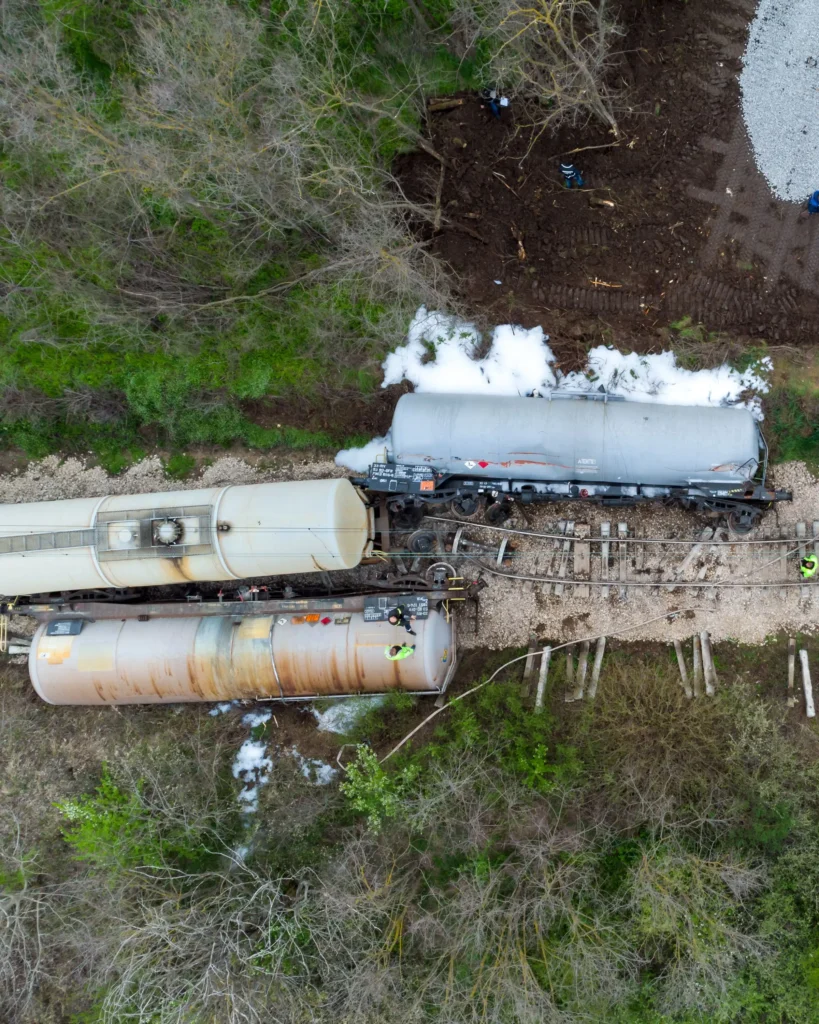
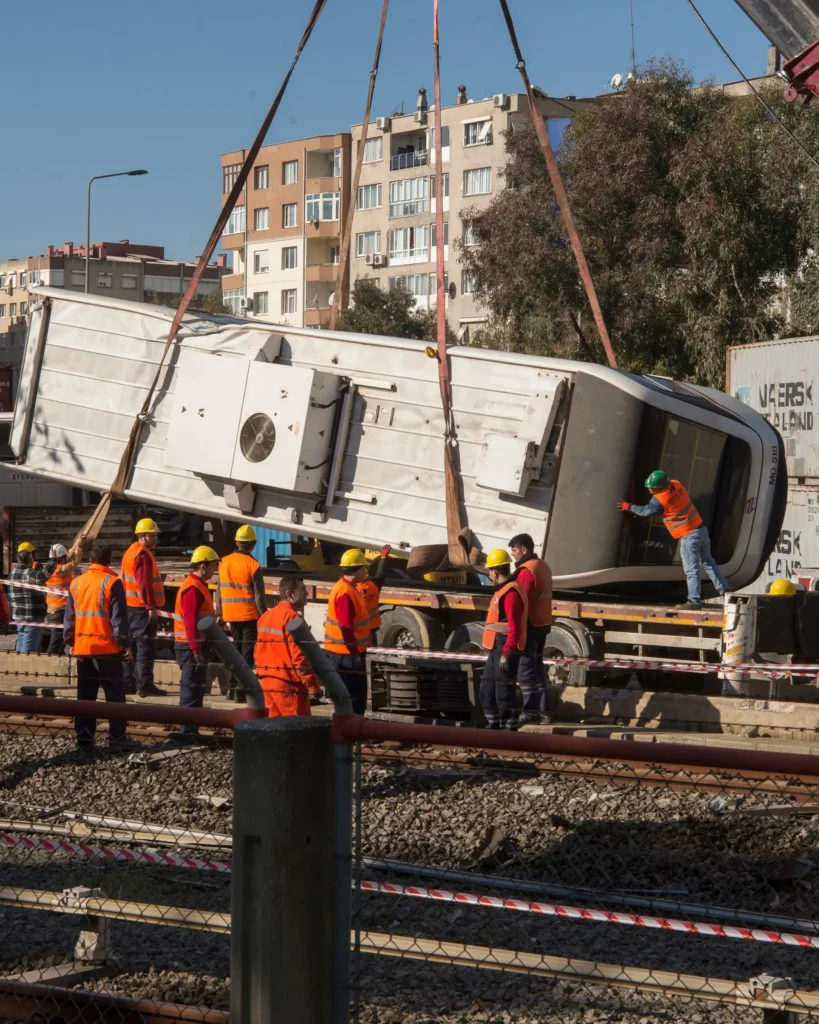
A derailment is different from most other railroad events. Once wheels leave the rail, control is largely gone. Common consequences include:
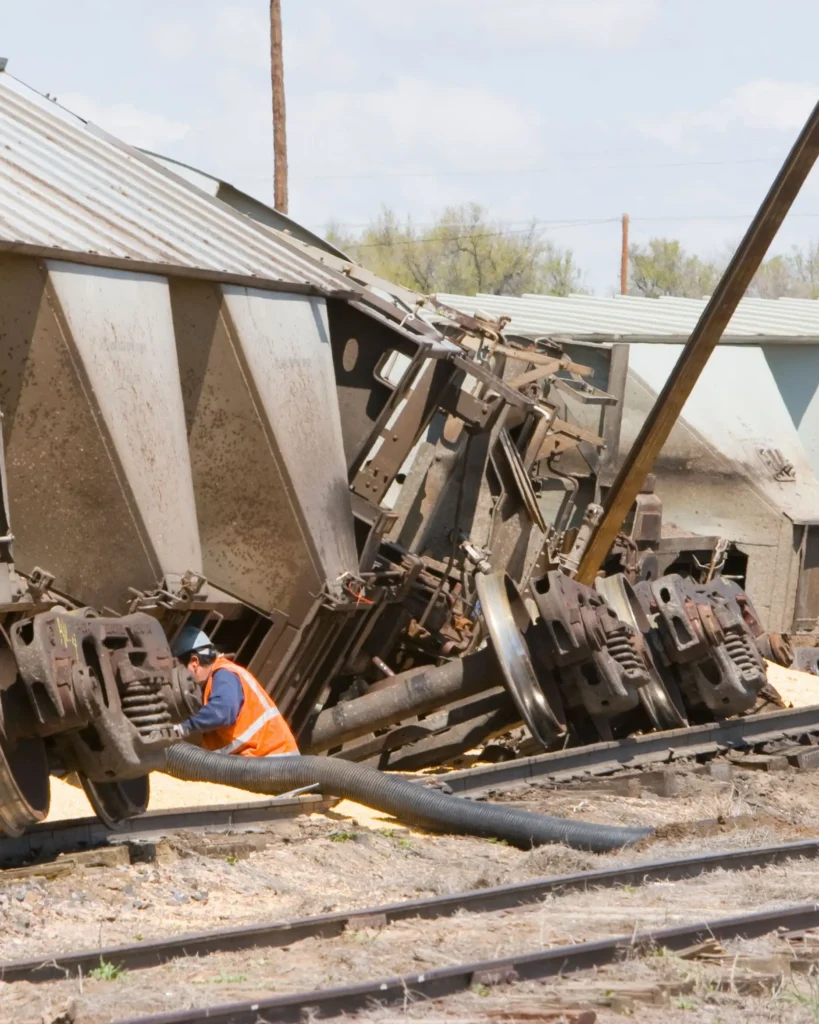
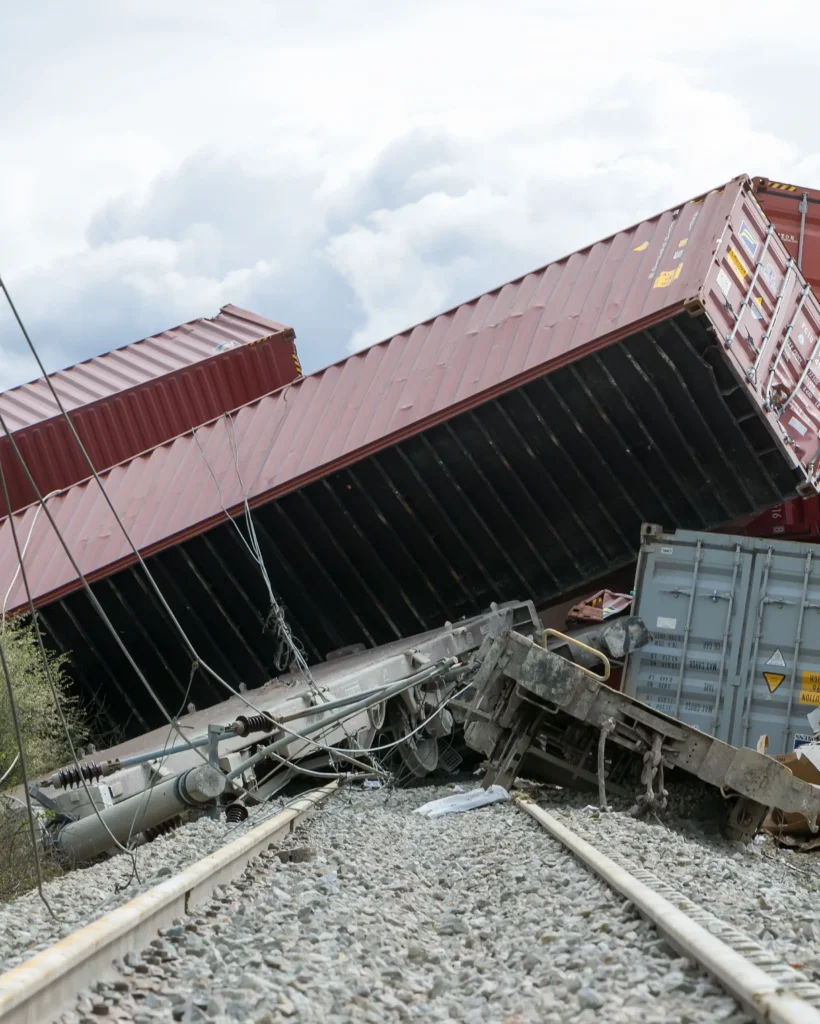
- Railcar and locomotive rollovers – Railcars and locomotives can overturn, jackknife, or collide with surrounding structures, exposing passengers and people nearby to severe impact and crush injuries.
- Hazardous material releases – Freight derailments involving tank cars or hazardous cargo can create additional risks from fire, explosion, smoke, or chemical releases that affect people beyond the immediate crash site.
- Limited escape routes – Passengers and other occupants may face limited escape routes if railcars overturn, doors become inaccessible, or fire, water, smoke, or debris blocks evacuation.
- Multiple overlapping hazards – A derailment can trigger bridge collapses, vehicle impacts at crossings, damage to nearby structures, and secondary collisions with other trains or equipment.
- Physical and psychological fallout – Survivors may face long-term physical limitations, ongoing medical treatment, and psychological trauma after a serious derailment.
Common types of train derailments
Derailments occur on main lines, in yards, at industrial facilities, and in work zones. Some patterns we frequently see:
- Mainline freight derailments – Freight derailments can involve long trains, heavy loads, hazardous cargo, mechanical failures, track defects, or operating conditions that affect passengers, motorists, first responders, and surrounding communities.
- Passenger and commuter train derailments – Passenger trains can leave the tracks on curves, bridges, switches, or other areas because of track conditions, excessive speed, equipment failure, signal issues, or other operational problems.
- Bridge and embankment derailments – Derailments on elevated structures, bridges, steep embankments, or near waterways can pose additional risks, including falls, structural damage, difficult evacuation, and complex rescue operations.
- Derailments involving hazardous materials – Freight cars carrying chemicals, fuels, or other hazardous materials can create risks from spills, fires, explosions, and airborne releases that extend beyond the derailment site.
Railroad employee injured in a yard, work zone, or industrial derailment? Explore railroad injuries, accidents, and worksite hazards.
What Can Cause a Train Derailment?
A proper derailment investigation goes far beyond blaming a single crew member. We focus on system failures such as:
Track conditions and infrastructure
- Broken or cracked rails
- Wide gauge or poor alignment
- Deteriorated ties and ballast
- Areas with prior defects, slow orders, repair history, complaints, or recurring track problems
Inspection, maintenance, repair, and track-condition records may help establish whether a defect developed over time and how the railroad or other responsible entity responded.
Equipment and mechanical issues
- Defective or worn wheels, axles, bearings, couplers, and draft systems
- Railcars with prior defect reports, bad-order records, or recurring mechanical problems
- Locomotives with unresolved mechanical or braking defects
Maintenance and inspection records can help determine whether a mechanical problem existed before the derailment and whether it should have been identified or corrected.
Learn more about railroad equipment and component failures.
Speed, train handling, and train configuration
Potential issues may include:
- Train speed in relation to track conditions, curves, grades, or temporary restrictions
- Compliance with slow orders and operating bulletins
- Train length, weight, and distribution of railcars
- Placement of heavy or high-center-of-gravity loads
- Braking and other train-handling decisions
Event-recorder data, operating records, train consists, dispatch records, and applicable rules may help reconstruct how the train was being operated before the derailment.
Signals, Positive Train Control (PTC), and communication
- Signal-system performance and maintenance
- Positive Train Control (PTC) operation where applicable
- Communications between dispatchers, train crews, and maintenance personnel
- Information about track conditions, work zones, restrictions, or other hazards
Signal records, system data, dispatch communications, and operating records may help determine whether information or technology played a role in the derailment.
Operating procedures and human factors
Depending on the derailment, the investigation may also examine:
- Training and qualification records
- Crew scheduling and hours of service
- Staffing and supervision
- Dispatching decisions
- Compliance with operating rules and procedures
Prior defects, incidents, and safety concerns
Relevant records may include:
- Prior derailments or near-misses in the same area
- Track or equipment defect reports
- Inspection findings
- Slow orders and maintenance records
- Employee or public complaints
- Safety studies, audits, or recommended improvements
These records may help establish whether the condition involved in the derailment existed before the incident and what was done in response.
Who May Be Responsible for a Train Derailment?
Depending on how the derailment occurred, potentially responsible parties may include:
- Railroad operators responsible for train operations, inspection, or maintenance
- Track owners and infrastructure companies responsible for the track, switches, bridges, or right-of-way
- Mechanical and track contractors performing inspection, repair, maintenance, or construction
- Signal and technology companies involved with signaling, control systems, or related equipment
- Other railroads or host carriers when multiple companies use or control the same infrastructure
- Industrial or property owners where a derailment occurs on private or industrial track
- Equipment and component manufacturers when a defective wheel, axle, bearing, brake, coupler, or other component contributed
A derailment can involve overlapping operating, maintenance, property, contractor, and product-liability issues. Identifying who controlled each part of the rail system is an important part of determining how the derailment occurred and which claims may be available.
Railroad employee injured in the derailment? Learn how FELA works for injured railroad workers
What to Do After a Train Derailment Injury
After a serious derailment, important evidence may be spread across multiple companies, agencies, vehicles, and locations. Taking reasonable steps to preserve information can help document what happened and the effect the incident had on you or your family.
- Get medical care. Report all symptoms and follow recommended treatment.
- Preserve photographs and video. Keep any images of the train, railcar, derailment scene, surrounding conditions, fire, smoke, spilled material, or visible injuries.
- Save travel and incident information. Keep tickets, reservations, train numbers, seat or car information, emails, alerts, and communications from the rail operator.
- Identify witnesses. Preserve the names and contact information of passengers, first responders, or others who witnessed what happened.
- Keep official communications. Save claim forms, letters, emails, incident reports, and communications from railroads, transportation authorities, insurers, or other companies.
- Document continuing harm. Keep medical records, bills, employment records, and information showing how the injury has affected your daily life.
The entities involved and the applicable legal requirements can vary depending on the train, location, operator, and circumstances of the derailment.
Railroad employee injured while working? Visit our dedicated railroad injury website for information about FELA and railroad workplace injuries.
Learn More
Toxic Chemical Exposure After Train, Truck, and Warehouse Spills
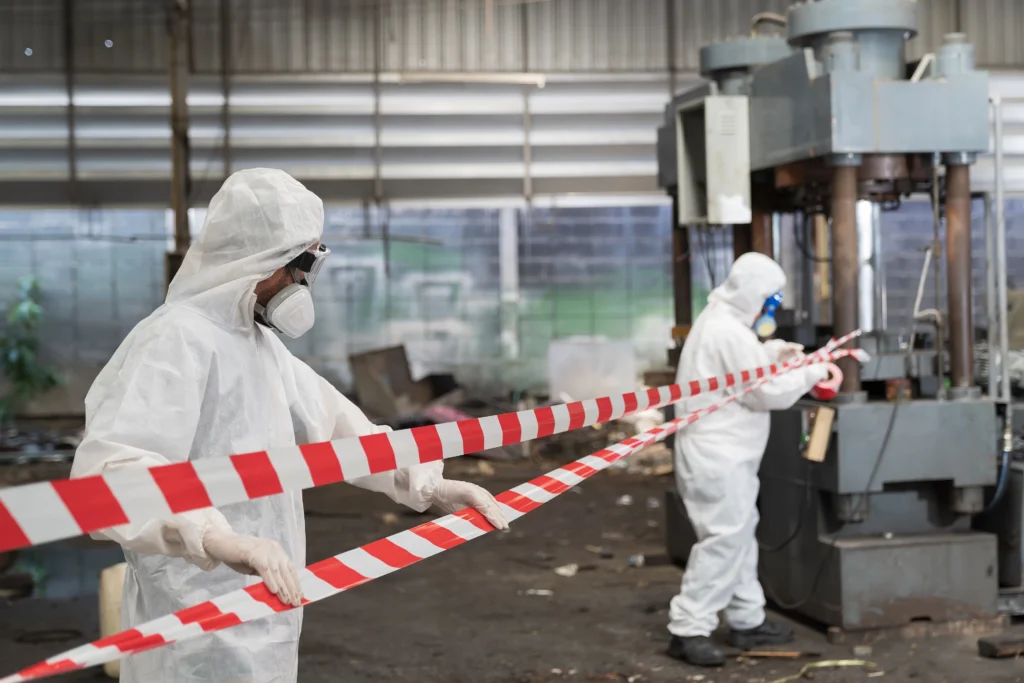
A train derailment, tanker truck crash, or warehouse spill can release hazardous chemicals into the air or across a worksite within seconds. Workers, drivers, emergency responders, nearby residents, and others may be exposed by breathing in contaminated air, getting chemicals…
Railroad Toxic Exposure Claims: Cancer, Lung Disease, and Proving Workplace Causation
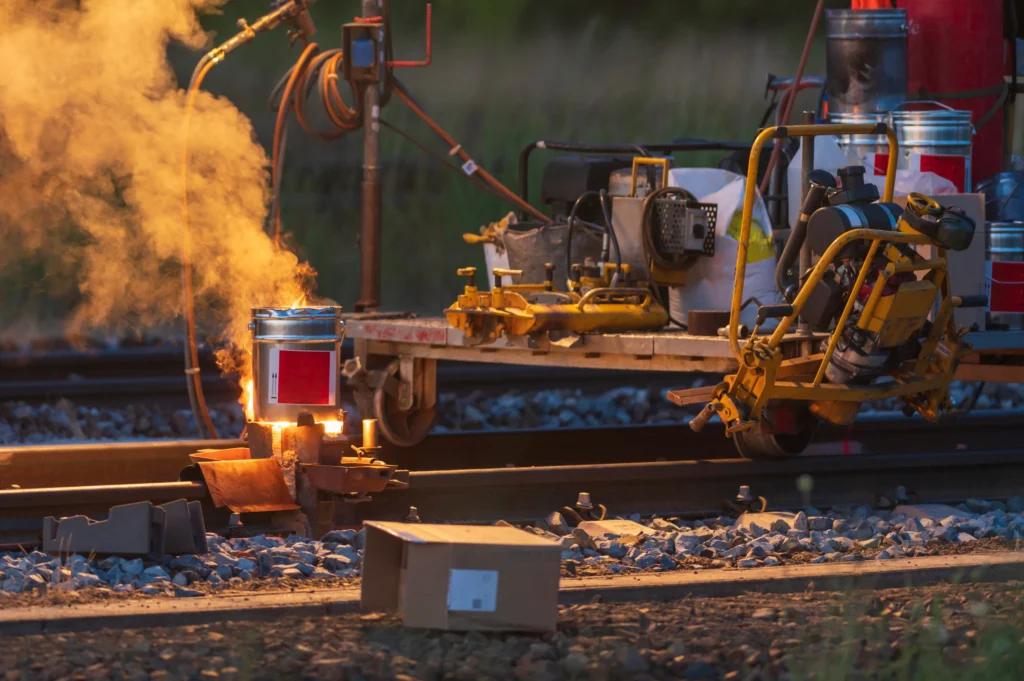
Railroad workers face dangers that extend far beyond traumatic injuries and derailments. For decades, railroad employees have been exposed to toxic substances capable of causing serious illnesses, including cancer, chronic lung disease, and other life-altering medical conditions. Under the Federal…

Fatal Accidents Involving Railroad Employees: What Families Should Know About Wrongful Death Claims Under FELA
A fatal railroad accident leaves families facing far more than grief. Many are suddenly dealing with lost income, unanswered questions about what happened, and pressure from railroad investigators before they fully understand their rights. If a railroad employee is killed…
FELA vs. Worker’s Comp: What Qualifies as an FELA Claim?
One of the most important questions in a railroad injury case is whether the claim belongs under a state’s workers’ compensation law or the Federal Employers’ Liability Act (FELA). he answer to this question can have a dramatic impact on…
Comparative negligence under FELA: what it means and how railroads try to shift blame
If you are a railroad worker hurt on the job, your claim usually falls under the Federal Employers’ Liability Act (FELA), not standard workers’ compensation. One of the biggest battleground issues in a FELA case is comparative negligence. Railroads often…
FELA vs. workers’ comp: the key differences railroad workers can’t afford to miss
If you are hurt working for a railroad, your claim usually is not a standard workers’ compensation case. Most railroad employees fall under the Federal Employers’ Liability Act (FELA), a federal law that works very differently than state workers’ comp.…