
Equipment failure on the railroad? We hold railroads and suppliers accountable.
Locomotives, cars, and on-track equipment are supposed to be inspected, maintained, and taken out of service when something is wrong. When a critical part fails under load like a wheel, axle, bearing, brake, coupler, or safety device, the result can be a derailment, runaway movement, violent shove, or catastrophic injury to the people working the line.
These are not “freak accidents.” Federal rules and railroad operating standards require regular inspections, bad-order tagging, and prompt repairs for mechanical and electrical defects. The Federal Railroad Administration even tracks accident causes tied specifically to mechanical and electrical failures, including brakes, couplers, and draft systems, axles and bearings, wheels, locomotives, and other components. When those systems are ignored or rushed, workers, passengers, and communities pay the price.
If you were hurt because equipment or a component failed on the railroad, or you lost a family member to a failure-related derailment or yard incident, our role is straightforward: find out exactly what went wrong, identify every company that could have prevented it, and pursue full compensation under FELA and any available third-party claims.

How Much Is Your Case Worth?
Why equipment & component failures are so dangerous
Even a “small” mechanical defect can have massive consequences once a train or piece of equipment is moving. Common risk factors include:
- Hidden defects that only show up under stress – Wheels, axles, bearings, couplers, and draft systems may look acceptable in a quick walk-by inspection, but fail under load, at speed, or on a curve, causing derailments, break-in-twos, runaways, or violent slack action.
- Loss of braking or control – Defective air brake components, hand brakes, or locomotive control systems can leave crews unable to slow or stop, turning routine moves into emergencies in seconds.
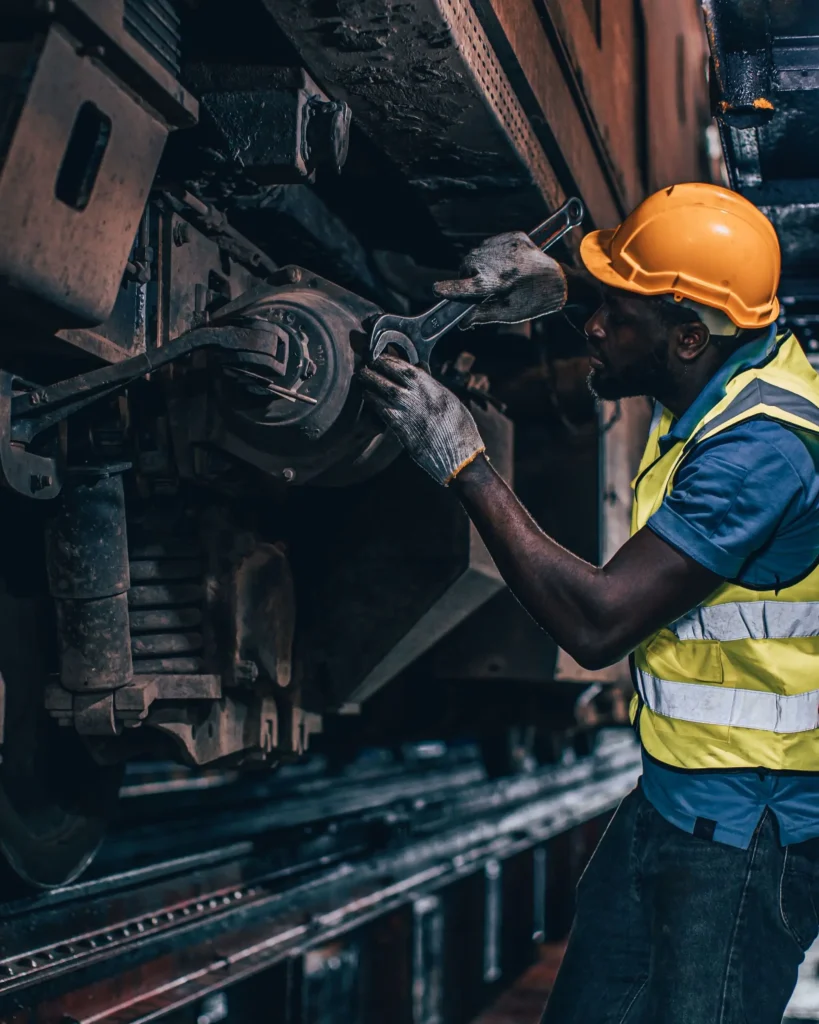
- Run-overs, pinches, and crush injuries to ground workers – When jacks, winches, switches, or on-track equipment malfunction, workers on the ground are often in the direct line of fire, pinned between equipment, struck by shifting cars, or caught in moving machinery.
- Secondary hazards: fires, hazmat, and structural collapse – Equipment failures can cause derailments, fuel leaks, electrical fires, or tank car breaches, putting crews, passengers, and nearby neighborhoods at risk of burns, explosions, and toxic exposures.
- Repeat problems in a “safety culture on paper only” – Many catastrophic events follow earlier warnings: chronic hot bearings, recurring brake issues, ignored bad-order tags, or complaints that were never fixed. The pattern is preventable, until it isn’t.
What went wrong: patterns we see again and again
In case after case, the same themes appear:
- Deferred or rushed maintenance to keep equipment “online” a little longer
- Shop and mechanical forces understaffed, overworked, or pressured to clear bad-orders quickly
- Failure to comply with inspection intervals, FRA rules, or manufacturer service bulletins
- Ignored hot-bearing detectors, prior alerts, or repeated trouble tickets on the same car or locomotive
- Using worn or incorrect replacement parts, or mixing incompatible components
- Poor record-keeping and “lost” documentation that hides the true history of a car, locomotive, or tool
- A safety culture that blames individual workers instead of fixing systemic mechanical issues
Our investigations focus on the paper trail (or its suspicious absence): inspection records, bad-order tags, repair histories, detector logs, prior incident reports, and internal communications — the evidence that shows who knew what, and when they knew it.
Common equipment & component failure incidents we see
Equipment and component failures can happen anywhere in the rail system, main line, yards, shops, industrial tracks, and passenger operations. Some of the most frequent fact patterns include:
Brake system failures
Train or locomotive brakes that fail to apply or release; stuck brakes causing excessive heat; air leaks; malfunctioning dynamic brakes; or defective hand brakes. These failures can lead to runaways, rear-end collisions, derailments, and serious onboard and ground-worker injuries.
Wheels, axles, and bearing failures (“hot boxes”)
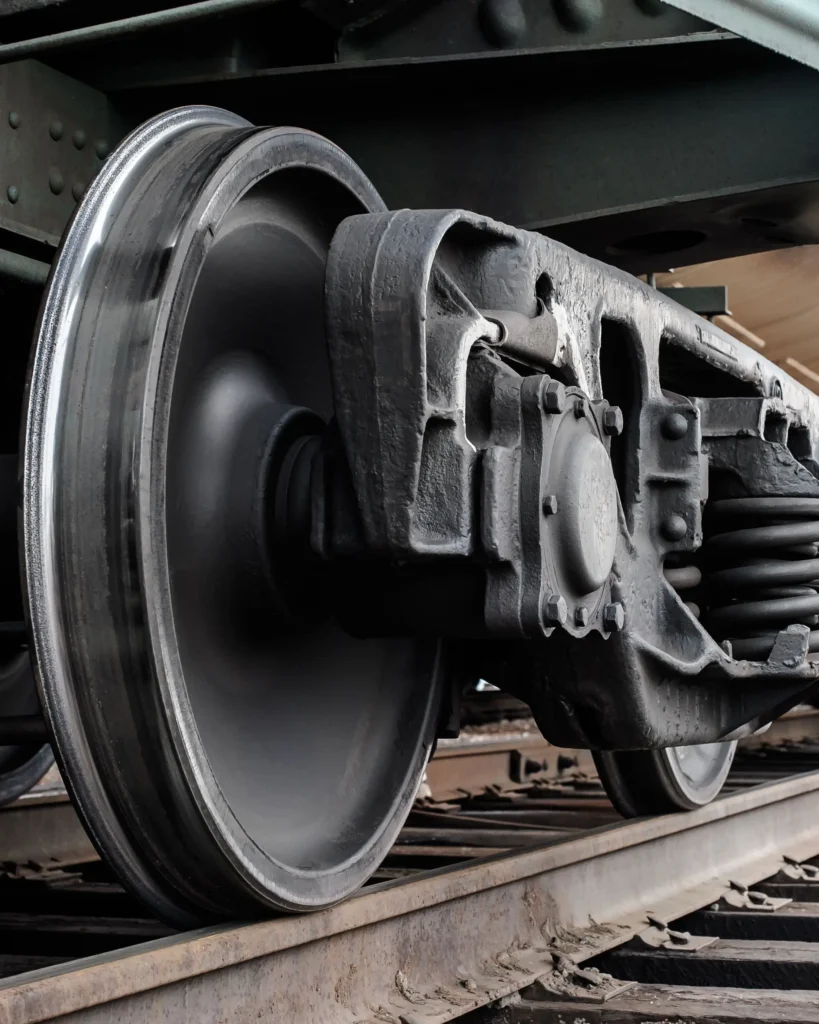
Broken or flat wheels, overheated or fractured bearings, and cracked axles that should have been detected and repaired under applicable standards but were left in service. These defects are a known cause category in FRA accident data and often show up after the fact in derailment investigations.
Coupler and draft-gear failures
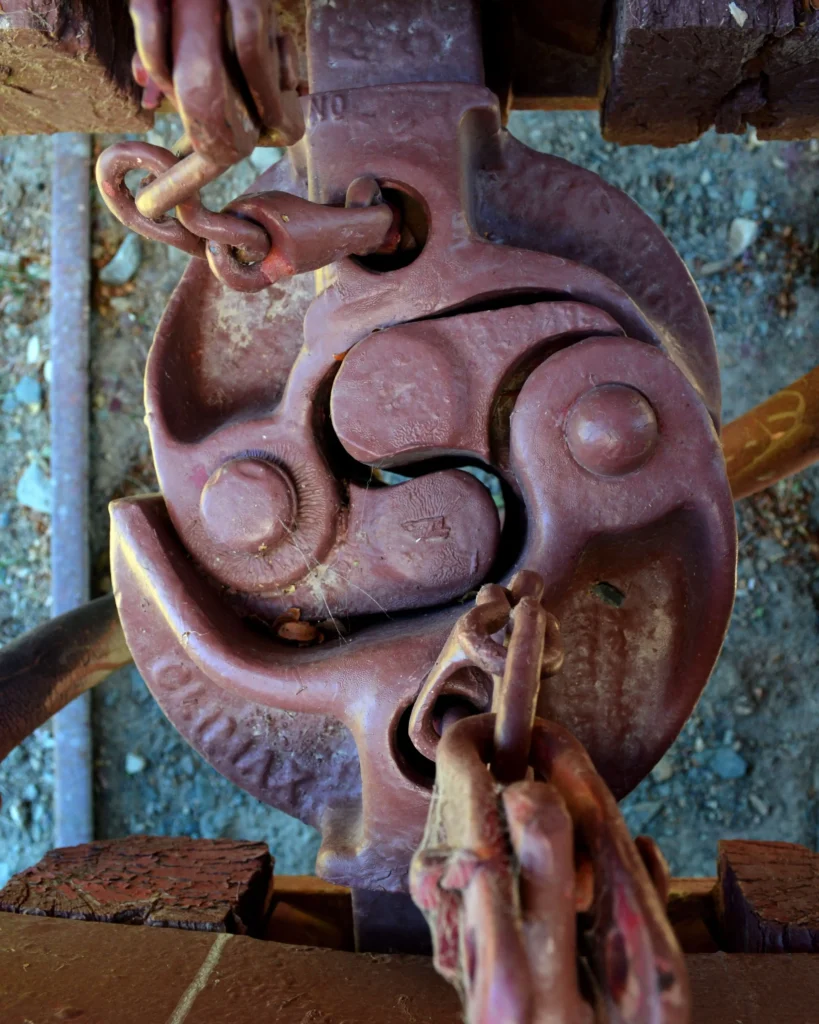
Knuckles, couplers, yokes, or draft gear that break or disengage under load, causing break-in-two events, unintended movements, violent slack action, and injuries to crews handling the train or working adjacent tracks.
Locomotive mechanical and safety device failures
Defective seats, handrails, steps, cab doors, headlights, sanders, horn/bell systems, or “alerter” / dead-man controls; traction motor or fuel system failures that cause sudden loss of power or fires; cooling system failures that force unsafe operating conditions.
On-track equipment and roadway machinery failures
Hy-rail trucks, tampers, ballast regulators, tie machines, cranes, and other roadway equipment with defective brakes, outriggers, hydraulic systems, guards, or backup alarms exposing roadway workers and contractors to crush and struck-by hazards.
Shop tools, lifting equipment, and yard devices
Failed jacks, hoists, cranes, turntables, car movers, and other equipment that drop or shift loads; defective power tools; and unsafe rigging or lifting components that break during use, causing falls, crush injuries, and amputations.
Who may be responsible
Depending on the facts, responsibility for equipment and component failures may fall on:
- The railroad employer – For failing to provide reasonably safe equipment, tools, and workplaces; not enforcing inspection and maintenance rules; and sending workers out with known defects, under the Federal Employers’ Liability Act (FELA).
- Mechanical and shop contractors – Third-party shops or vendors that inspect, repair, or rebuild cars, locomotives, or components and sign off on unsafe equipment.
- Component manufacturers and suppliers – Companies that design or supply defective wheels, bearings, brakes, couplers, control systems, safety devices, or other parts that fail in service.
- Track, yard, or industrial facility owners – When failures occur on private or jointly used tracks where ownership and maintenance are split.
- Equipment and tool manufacturers – Makers of jacks, hoists, power tools, and other shop or yard equipment that catastrophically fail during use.
Our job is to map out each entity’s obligations, compare them to what actually happened, and pursue every viable FELA and third-party claim.
Your rights after an equipment or component failure
Whether you were a passenger or a rail worker, you If you’re a railroad worker injured because equipment or a component failed, you have important protections:
- You have the right to a reasonably safe place to work and safe equipment. Under FELA, your employer is liable if its negligence played any role, even a small one, in causing your injury.
- You have the right to choose your own doctors. You do not have to rely solely on railroad-chosen providers or “company clinics.”
- You do not have to sign railroad paperwork or give recorded statements before speaking with a lawyer. Incident reports and statements are often drafted to minimize the railroad’s fault.
- You have the right to report defects and injuries without retaliation. Retaliation for reporting a safety issue or injury can itself be a violation of federal law.
If you’re a passenger, contractor, or member of the public injured in a derailment, yard event, or other incident tied to equipment failure, you may have substantial personal injury or wrongful death claims against the railroad, equipment owners, and component manufacturers involved.
Learn More
FELA vs. workers’ comp: the key differences railroad workers can’t afford to miss
If you are hurt working for a railroad, your claim usually is not a standard workers’ compensation case. Most railroad employees fall under the Federal Employers’ Liability Act (FELA), a federal law that works very differently than state workers’ comp.…
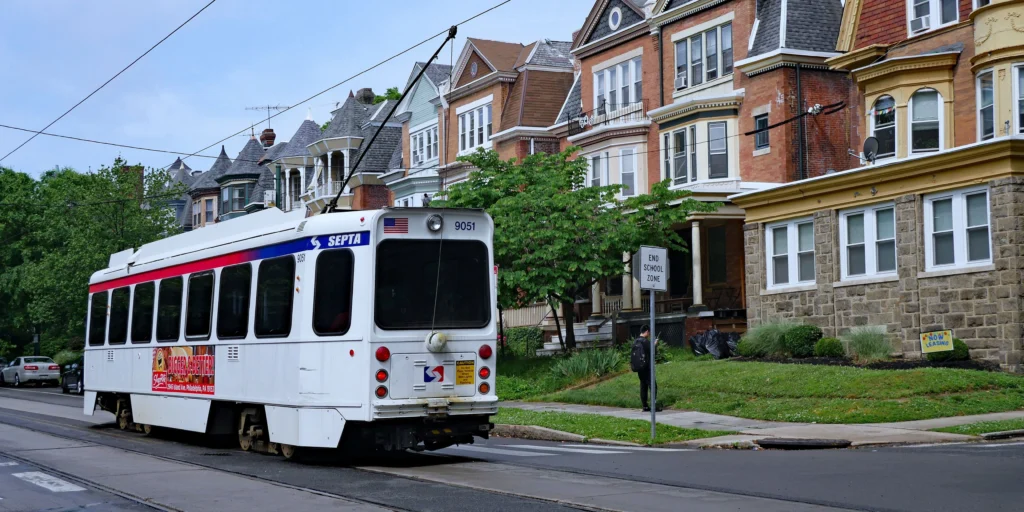
Legal Insight: Defining the Ownership of Tracks in Philadelphia – Where Should I look?
This article was created by the Philadelphia Trial Lawyers Association for The Verdict newsletter in conjunction with Cormick McLaughlin of McEldrew Purtell and is intended to provide legal insight into the ownership of railroad tracks in the Philadelphia area. Finding…
$700,000 FELA Settlement
Colin Haviland and Daniel Purtell settled an FELA case for $700,000 on behalf of a client who suffered severe injuries as a result of his Railroad employer failing to supply the proper equipment to complete his job. McEldrew Purtell’s client…

$885,000 FELA Settlement
Attorney John Coyle settled an FELA case for $885,000 for a union railroad worker, John Felder, who suffered serious injuries on the job, while loading railroad ties. Mr. Felder and a coworker were tasked with moving railroad ties onto a…

$1.6 Million Verdict Against SEPTA
McEldrew Purtell attorney, John Coyle, supported by Associate Attorney, Cormick McLaughlin, secures a $1.6 million verdict in the Philadelphia Court of Common Pleas on a no offer case on behalf of SEPTA conductor, Donnell Shuler in an FELA & Railroad case.…
Everything You Should Know About FELA Claims
As a hardworking railroad employee, you enjoy many exciting career opportunities but are also exposed to alarming risks. It’s common to suffer minor scrapes, but railroad workers are also vulnerable to broken bones, concussions, or even severe burns. Given these…