

Serious injuries at railroad crossings require a detailed investigation.
Railroad crossing collisions can cause catastrophic injuries or death when a train strikes a car, truck, bus, cyclist, or pedestrian. The size and stopping distance of a train can leave people with traumatic brain injuries, spinal cord injuries, amputations, crush injuries, severe orthopedic trauma, or other permanent harm.
These incidents may involve malfunctioning warning devices, obstructed sight lines, unsafe crossing design, inadequate maintenance, train-operation issues, or failures by other companies responsible for the roadway or crossing.
When a serious collision occurs, determining whether a preventable safety failure contributed requires examining the crossing, train operations, warning systems, records, and the actions of every potentially responsible party.
Were You Working for a Railroad When the Collision Occurred?
Railroad employees injured at crossings may have rights under the Federal Employers’ Liability Act (FELA). Visit McEldrew Purtell’s dedicated railroad injury website for information about FELA, railroad workplace injuries, evidence preservation, and the railroad injury team.
How Much Is Your Case Worth?
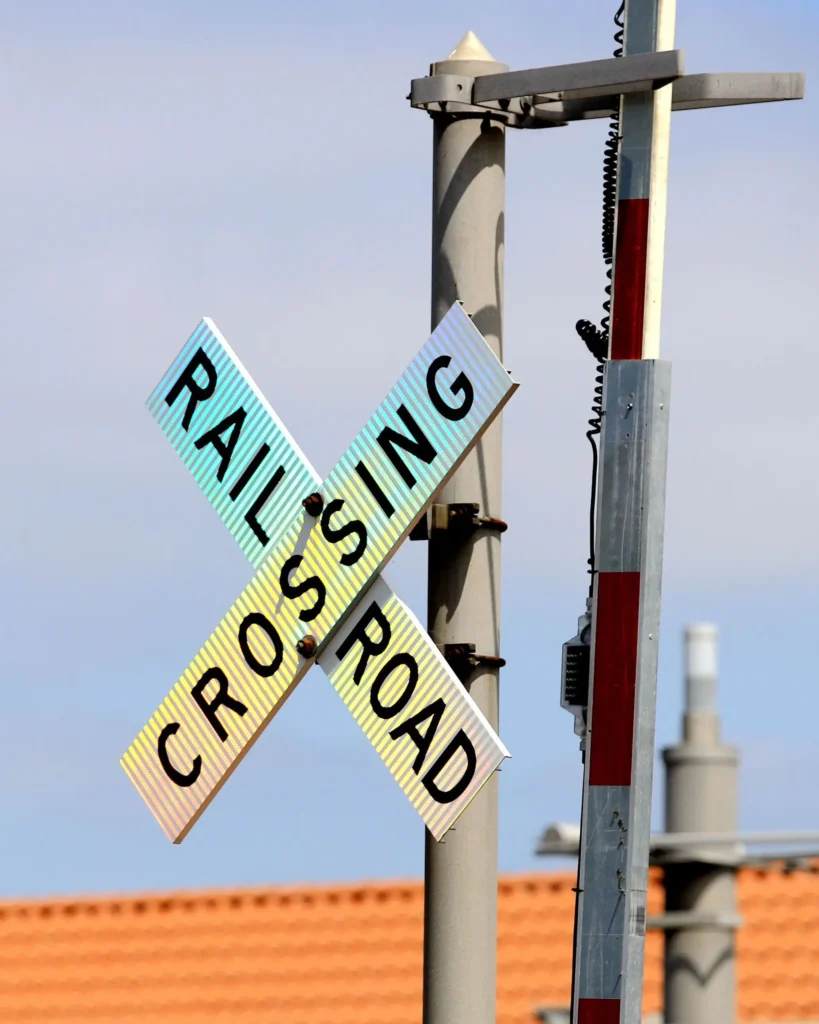
Why these incidents are so dangerous
Even a slow-moving collision with a train can be devastating. A collision between a train and a vehicle or pedestrian can produce devastating injuries, even when the train is traveling at a relatively low speed.
Common risk factors include:
- Enormous forces at impact – Trains weigh thousands of tons and require a long distance to stop. When they strike a vehicle or pedestrian, the energy transfer is extreme, leading to brain and spinal injuries, amputations, crush injuries, and fatalities.
- Limited margin for error – At many crossings, sight lines, curves, or building/vegetation obstructions mean motorists, pedestrians, and cyclists have only a moment to see and react before impact.
- False sense of security – Drivers and pedestrians rely on crossing lights, bells, gates, signage, and other warnings. When those systems are missing, defective, improperly timed, or ignored, people are put in the “danger zone” without warning.
- Multi-victim events – School buses, transit buses, passenger vans, and work crews mean a single collision can injure or kill multiple people.
- Safety problems that may not be immediately visible – The cause of a crossing collision may involve maintenance records, prior complaints, planned upgrades, warning-system performance, sight-line conditions, or operating decisions that are not apparent at the scene.
The outcome is often catastrophic: traumatic brain injury, spinal cord injury, amputations, severe burns, crush injuries, and wrongful death.
Common incidents we see
These are some of the grade-crossing events that frequently lead to serious railroad and public injuries:
- Vehicle vs. train at passive crossings – Crossings with only crossbucks or minimal signage, no flashing lights or gates, and poor visibility. Drivers and pedestrians are left to “judge for themselves” at locations where limited warnings, restricted visibility, or other crossing conditions may increase risk.
- Signalized crossings where warnings fail – Lights that don’t activate, gates that don’t lower or rise too early, bells that malfunction, or improper activation timing. Without reliable warnings, road users are exposed at the worst possible moment.
- Commercial trucks, buses, and high-profile vehicles – Tractor-trailers, low-boys, tankers, dump trucks, school buses, and passenger coaches that get struck at crossings. These cases often involve route planning failures, inadequate training, or ignoring known low-clearance/high-center risks.
- Pedestrian and cyclist strikes – People walking, jogging, using mobility devices, or biking through or near crossings where sight lines are blocked, warnings are confusing or absent, or trains move quietly and quickly.
- Private, industrial, and plant crossings – Crossings serving factories, warehouses, refineries, or terminals where heavy truck traffic, poor signage, and inadequate communication between facility operators and the railroad create a predictable hazard.
- Multiple-track and “second train coming” events – Incidents where one train passes and obscures the view or sound of a second train, yet the crossing design, warnings, and procedures do not adequately protect against this known danger.
Railroad employee injured while working at or near a crossing? Explore railroad injuries and worksite hazards on our dedicated railroad injury website.
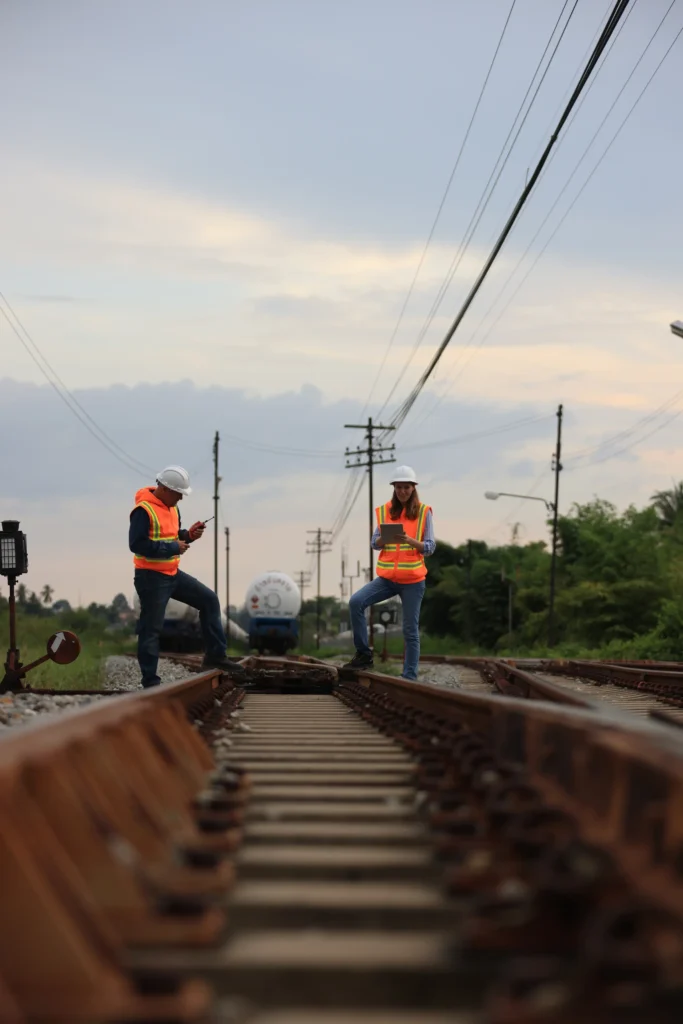
Common crossing and rail safety failures
In these cases, we examine how the crossing and train were designed, built, operated, and maintained, and whether appropriate protections were in place for motorists, pedestrians, cyclists, and other people using the crossing. Failures we frequently uncover include:
Inadequate or missing active warnings
Lights, bells, and gates not installed despite crash history, high train speeds, heavy traffic, or known sight-line problems; or active warning systems that were removed, changed, or not upgraded despite documented safety concerns.
Signal malfunction and improper timing
Crossing warning devices that activate too late, not at all, or with inconsistent timing; gates that rise while a train is still occupying the crossing; systems left in disrepair or bypassed instead of being taken out of service safely.
Obstructed sight lines and poor visibility
Vegetation, parked rail cars, buildings, structures, or track curvature that block the view of oncoming trains; faded pavement markings; missing or obscured signage; inadequate lighting for night or bad-weather conditions.
Excessive speed and unsafe train handling
Train speed, horn or bell use, braking, crew response, and other operating decisions may become relevant when reconstructing what happened at a high-risk crossing.
Hazardous crossing geometry and approach design
Steep grades, “hump” crossings that high-center long vehicles, sharp curves, misaligned approaches, and poor drainage that were never corrected despite complaints or prior incidents.
Prior safety concerns and uncompleted improvements
Prior crashes, near-misses, complaints, inspections, or safety studies may show that concerns existed before the collision. Planned improvements, warning upgrades, vegetation control, roadway changes, or crossing closures may also become relevant to the investigation.
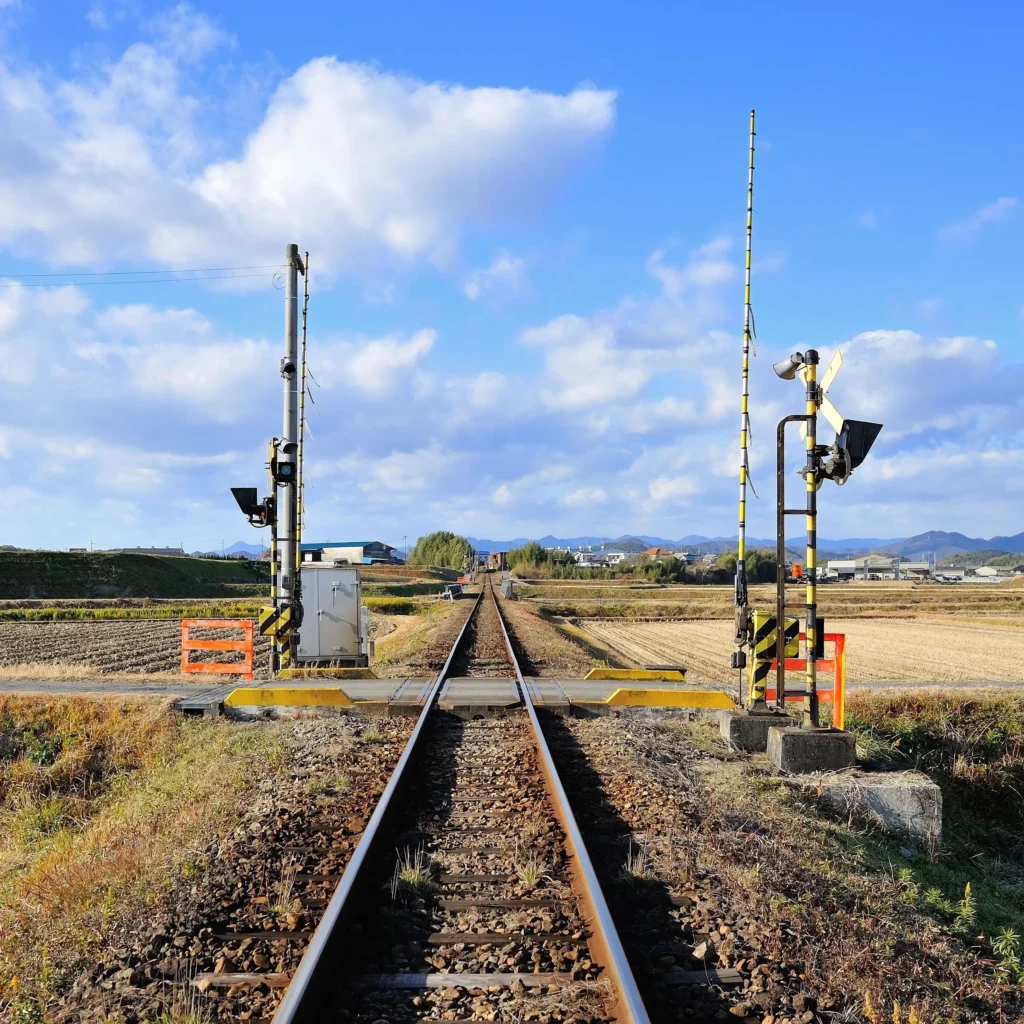
Who May Be Responsible for a Railroad Crossing Collision?
These crashes almost always involve companies and entities beyond a single driver. Serious grade-crossing cases often include:
- Railroad companies operating the train and maintaining the crossing and signal systems.
- Track and crossing owners (which may differ from the operating carrier.)
- Signal and crossing maintenance contractors responsible for installation, inspection, and repair.
- State and local transportation agencies that design roadway approaches, signage, markings, and traffic patterns.
- Commercial motor carriers and bus companies that route and train their drivers, including school districts and transit agencies.
- Industrial or facility owners controlling private or plant crossings.
- Equipment and component manufacturers whose gates, lights, circuitry, or warning devices fail under foreseeable conditions.
More than one company or public entity may be responsible for the condition of a crossing, train operations, the roadway approach, the warning system, or the vehicle involved. Our investigation focuses on identifying who controlled each part of the crossing and what evidence may show about how the collision occurred.
Railroad employees injured in crossing-related incidents can find information about FELA and railroad workplace injury claims.
Evidence that can matter in a crossing collision investigation
Understanding why a railroad crossing collision occurred often requires looking beyond the crash scene. Records created before and immediately after the incident may help establish how the crossing, warning systems, roadway, and train were operating.
Important evidence may include:
- Signal, gate, and warning-system inspection and maintenance records
- Event-recorder and locomotive video data
- Dispatch and train-operation records
- Photographs and measurements of sight lines, signage, roadway markings, and vegetation
- Crossing inventories, engineering studies, and planned safety improvements
- Prior collision, near-miss, complaint, and incident records
- Surveillance, dash-camera, or witness video
- Vehicle routing and driver-training records when a commercial vehicle or bus is involved
- Records identifying the companies or public entities responsible for the crossing, roadway, track, or warning equipment
Preserving this evidence early can help establish what happened and which parties may have been involved.
Learn More
Toxic Chemical Exposure After Train, Truck, and Warehouse Spills
A train derailment, tanker truck crash, or warehouse spill can release hazardous chemicals into the air or across a worksite within seconds. Workers, drivers, emergency responders, nearby residents, and others may be exposed by breathing in contaminated air, getting chemicals…
Railroad Toxic Exposure Claims: Cancer, Lung Disease, and Proving Workplace Causation
Railroad workers face dangers that extend far beyond traumatic injuries and derailments. For decades, railroad employees have been exposed to toxic substances capable of causing serious illnesses, including cancer, chronic lung disease, and other life-altering medical conditions. Under the Federal…
Fatal Accidents Involving Railroad Employees: What Families Should Know About Wrongful Death Claims Under FELA
A fatal railroad accident leaves families facing far more than grief. Many are suddenly dealing with lost income, unanswered questions about what happened, and pressure from railroad investigators before they fully understand their rights. If a railroad employee is killed…
FELA vs. Worker’s Comp: What Qualifies as an FELA Claim?
One of the most important questions in a railroad injury case is whether the claim belongs under a state’s workers’ compensation law or the Federal Employers’ Liability Act (FELA). he answer to this question can have a dramatic impact on…
Comparative negligence under FELA: what it means and how railroads try to shift blame
If you are a railroad worker hurt on the job, your claim usually falls under the Federal Employers’ Liability Act (FELA), not standard workers’ compensation. One of the biggest battleground issues in a FELA case is comparative negligence. Railroads often…
FELA vs. workers’ comp: the key differences railroad workers can’t afford to miss
If you are hurt working for a railroad, your claim usually is not a standard workers’ compensation case. Most railroad employees fall under the Federal Employers’ Liability Act (FELA), a federal law that works very differently than state workers’ comp.…