
South Philadelphia Parking Garage Collapse Raises Questions About Premises Liability and Third-Party Worksite Claims
A partial parking garage collapse in South Philadelphia has left one person dead and two others believed to be missing, according to current reporting. The collapse was reported just after 2:00 p.m. on Wednesday, April 8, 2026, on the 3000 block of Grays Ferry Avenue, and search-and-rescue operations have remained ongoing as officials work to stabilize the structure.
What happened in South Philadelphia
Philadelphia officials say the structure involved is a seven-level parking garage under construction for the Children’s Hospital of Philadelphia and intended to expand employee parking. Witnesses described hearing a rumble before part of the structure gave way. First responders focused on the lower levels of the building, where officials believed there may be an elevator shaft or stairwell, while heavy equipment was brought in to assist with debris removal. As of the latest reporting, the cause of the collapse has not yet been determined.
Why a collapse like this may involve more than a workers’ compensation claim
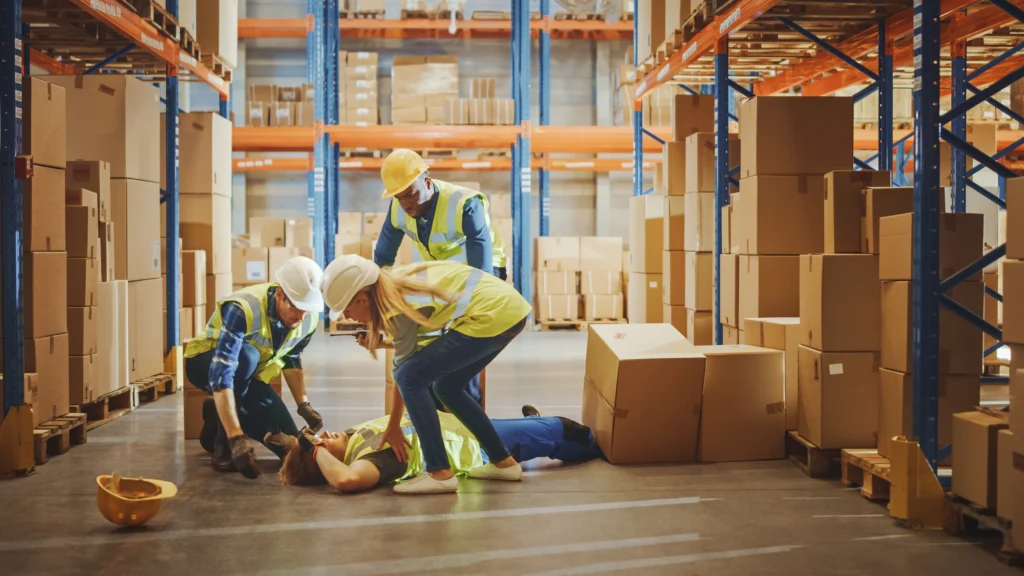
When a worker is seriously injured or killed on a construction site, many families are told the case begins and ends with workers’ compensation. That is not always true.
Workers’ compensation may provide important benefits, but catastrophic construction incidents can also raise separate third-party liability issues depending on what investigators uncover. In a structural collapse case, the legal questions often go well beyond an employer’s internal safety practices. They may include whether a property owner, developer, general contractor, subcontractor, engineer, equipment company, or site safety consultant contributed to the conditions that caused the collapse.
That distinction matters. Workers’ compensation and third-party civil claims are not the same thing, and in some cases both may exist at the same time.
How premises liability can become a major issue
Premises liability is often associated with slips, trips, and falls, but in serious construction and industrial incidents, it can involve much larger failures in how a site was designed, maintained, managed, or made safe for the people lawfully working there.
In a case like this, investigators may examine whether the site was reasonably safe for workers, contractors, and others present on the property. That can include questions such as:
- whether the structure was adequately supported during construction
- whether temporary bracing, shoring, or sequencing was appropriate
- whether known hazards were identified and corrected
- whether site access areas, lower levels, shafts, or stairwells created additional risks
- whether inspection, supervision, and coordination failures contributed to the event
If a property owner or another non-employer entity failed to maintain reasonably safe conditions, that may support a premises liability or negligence claim separate from workers’ compensation.
Construction accidents often involve multiple layers of responsibility
Major worksite collapses rarely come down to a single mistake. These incidents often involve overlapping decisions by multiple companies and professionals. Depending on the facts, a full investigation may look at:
- property ownership and site control
- construction management and subcontractor coordination
- engineering and design decisions
- temporary support systems and load calculations
- equipment failures
- inspection and code compliance issues
- prior complaints, warnings, or visible signs of structural distress
That is why injured workers and families should be cautious about assuming their options are limited. A workers’ compensation claim may be only one piece of the picture.
What injured workers and families should keep in mind
After a collapse, the first priority is medical care and safety. But documentation also matters. In catastrophic injury and wrongful death cases, early evidence can shape what is later discoverable and what claims may be available.
That may include:
- preserving photographs, videos, and communications from the scene
- identifying coworkers or witnesses who observed the collapse or conditions beforehand
- documenting who controlled the site and what companies were present
- keeping records of hospitalization, surgeries, lost wages, and out-of-pocket costs
- avoiding assumptions that workers’ compensation is the only possible recovery path
Every case depends on its facts, and the answer often turns on who controlled the premises, who created the hazard, and what the investigation ultimately shows.
A serious collapse deserves a serious investigation
The South Philadelphia garage collapse is still developing, and the official cause has not yet been identified. But when a structure under construction fails, the legal issues often extend beyond a routine workplace accident. These cases may involve premises liability, negligent site management, unsafe construction practices, or third-party failures that deserve close scrutiny.
McEldrew Purtell handles catastrophic construction, premises liability, and wrongful death cases involving complex liability questions. If you or your family were affected by a serious worksite collapse, contact our team for a confidential, no-cost case review.