

A device meant to save a life should never be the reason it’s lost.
Patients and families have suffered serious harm after medical devices, implants, and healthcare products failed during treatment, recovery, or long-term use. These failures can lead to infections, internal injuries, repeat surgery, organ damage, loss of mobility, dangerous medication errors, or death.
Recalls, FDA safety communications, and documented device concerns have kept these risks in focus across many types of products used in hospitals, surgical centers, clinics, and homes.
If you or someone you love was harmed, the central question is whether a defective device, unsafe implant, contaminated product, or preventable healthcare product failure played a role.

How Much Is Your Case Worth?

What Are Medical Device, Implant, and Healthcare Product Defect Claims?
Medical device and healthcare product defect claims involve products used to diagnose, monitor, treat, repair, support, or replace a part of the body. These products may be implanted permanently, used during surgery, inserted temporarily, reused between patients, or used by patients at home.
A claim may be investigated when a product fails, breaks, migrates, contaminates a patient, delivers the wrong amount of medication, produces inaccurate readings, causes unexpected complications, or exposes patients to risks that were not properly disclosed. Depending on the facts, the issue may involve defective design, manufacturing defects, inadequate warnings, poor instructions, contamination, software failures, battery problems, labeling problems, or unsafe post-market conduct.
These cases are different from ordinary medical malpractice claims. A healthcare provider may have used the product appropriately, but the product itself may have been unsafe. In other cases, both product failure and medical error may need to be investigated.
Medical Device Failures and Safety Issues Cases We Handle
Catheter, Scope & Infection-Transmission Device Lawsuits
Catheters, ports, reusable scopes, and other infection-transmission devices are used in diagnostic, surgical, vascular-access, and treatment procedures. When these products are contaminated, defectively designed, improperly reprocessed, or inadequately labeled, patients may suffer sepsis, bloodstream infections, organ damage, prolonged hospitalization, emergency surgery, or death. These claims may involve product defects, inadequate cleaning instructions, sterilization failures, contaminated components, negligent reprocessing, or failure to identify and respond to device-related infections.
Breast Implants & Breast Reconstruction Devices
Breast implants and reconstruction devices include silicone and saline implants, textured implants, tissue expanders, acellular dermal matrix products, and internal support mesh used in cosmetic or reconstructive procedures. Serious complications can include implant rupture, infection, capsular contracture, migration, chronic pain, failed reconstruction, breast implant-associated lymphoma, or the need for explant or revision surgery. Claims may involve product defects, inadequate safety warnings, known cancer risks, or negligent surgical and follow-up care.
Surgical Mesh & Soft-Tissue Repair Products
Surgical mesh and soft-tissue repair products are used in hernia repairs, pelvic procedures, abdominal wall reconstruction, and other surgeries meant to reinforce weakened tissue. When these products fail, patients may suffer chronic pain, infection, erosion, adhesion, bowel injury, recurrence, organ damage, or complex revision surgery. These cases may involve defective mesh design, inadequate warnings, material degradation, contamination, or failures in how the product was implanted, monitored, or removed.
Vascular, Neurovascular & Blood-Clot Devices
These devices are used to treat aneurysms, blood clots, narrowed vessels, stroke risks, and other serious vascular conditions. They may include flow diverters, embolization coils, vascular stents, grafts, IVC filters, thrombectomy devices, and clot-retrieval systems. When these devices fail, patients may suffer stroke, hemorrhage, thrombosis, embolism, device migration, fracture, vessel perforation, emergency surgery, or death.
Cardiac Implants & Rhythm Devices
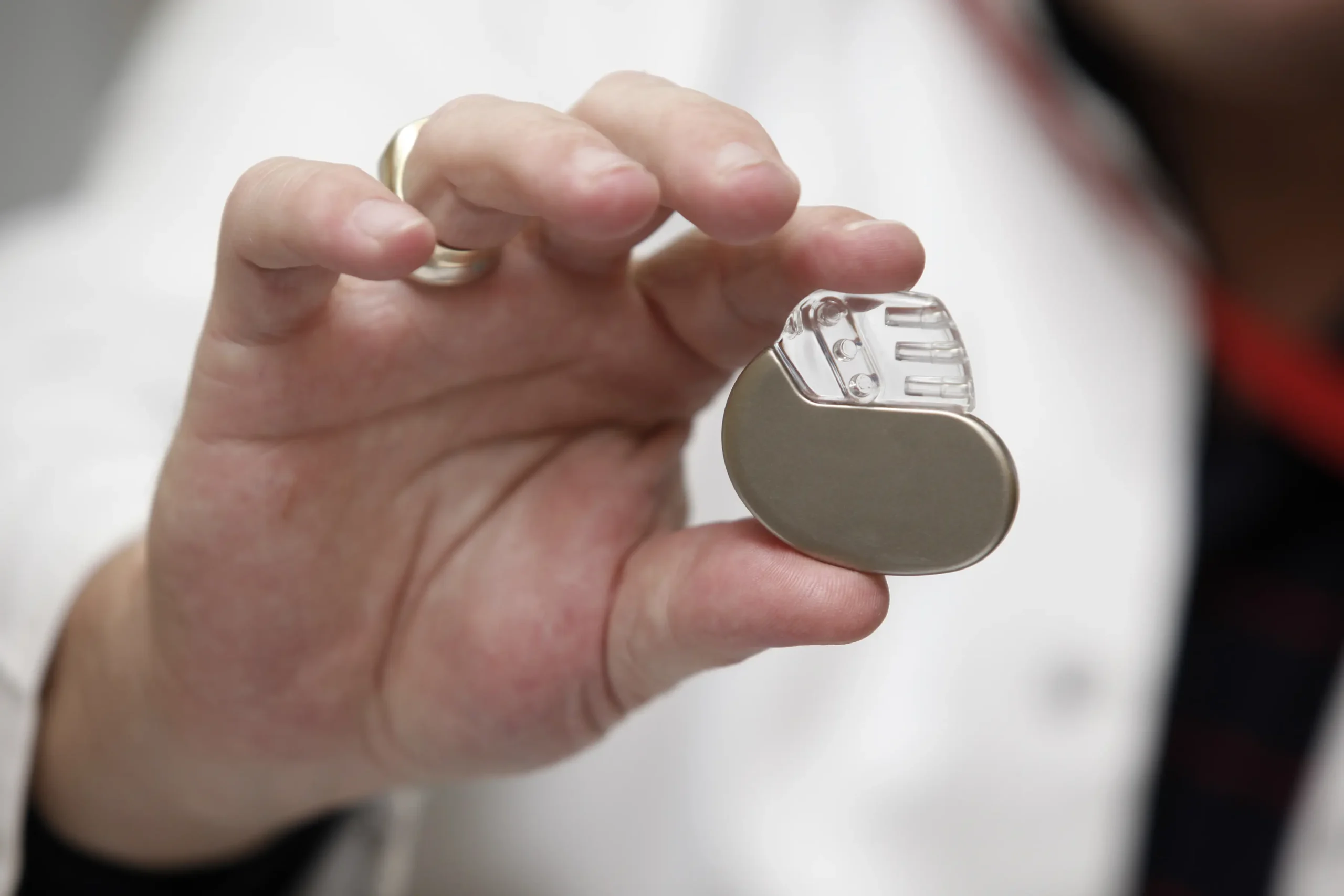
Cardiac implants and rhythm devices are used to regulate heart rhythm, support cardiac function, or repair structural heart problems. These products may include pacemakers, implantable cardioverter defibrillators, CRT devices, cardiac leads, heart valves, annuloplasty rings, and related monitoring or programming systems. When these devices fail, patients may suffer arrhythmias, loss of pacing or shock therapy, blood clots, infection, stroke, heart failure, emergency surgery, or death. Claims may involve defective device design, battery or lead failure, software malfunction, inadequate warnings, manufacturing defects, or negligent implantation, monitoring, or follow-up care.
Orthopedic, Spine & Reconstruction Implants
Orthopedic, spine, and reconstruction implants are used to repair or replace damaged bones, joints, discs, vertebrae, and other structural parts of the body. These products may include hip, knee, shoulder, ankle, and elbow replacements, spinal fusion hardware, artificial discs, bone graft substitutes, plates, screws, rods, TMJ implants, and facial reconstruction devices. When these implants fail, patients may suffer loosening, fracture, migration, infection, metallosis, nerve damage, nonunion, chronic pain, loss of mobility, revision surgery, or permanent disability. Claims may involve defective design, manufacturing defects, poor materials, inadequate warnings, contamination, or negligent implantation, monitoring, or follow-up care.
Diabetes, Infusion & Medication-Delivery Devices
Diabetes, infusion, and medication-delivery devices include continuous glucose monitors, insulin pumps, infusion pumps, dosing software, sensors, tubing, reservoirs, and connected apps. These products can drive critical treatment decisions or deliver medication directly into the body. When they malfunction, patients may suffer inaccurate readings, missed alarms, interrupted therapy, under-delivery or over-delivery of medication, severe hypoglycemia, diabetic ketoacidosis, overdose, hospitalization, brain injury, or death.
Neuromodulation & Pain-Management Devices
Neuromodulation and pain-management devices include spinal cord stimulators, pain pumps, neurostimulators, implantable pulse generators, batteries, leads, and drug-delivery systems used to treat chronic pain or neurologic conditions. When these devices fail or are improperly implanted, patients may suffer lead migration, infection, nerve damage, paralysis, burns, electrical malfunction, medication overdose or underdose, worsening pain, or repeat surgery. These cases may involve defective product design, inadequate warnings, negligent implantation, poor patient selection, or delayed diagnosis of complications.
What to do if you suspect a device or implant failure
If there has been a serious injury, focus on safety and evidence:
- Get medical care and follow your clinicians’ guidance. Don’t delay urgent treatment.
- Preserve the product evidence when possible: packaging, implant cards, device identifiers (UDI), manuals, chargers, home monitoring equipment, and app logs.
- If a device is removed or revised, ask that explanted components be retained and documented (chain-of-custody matters).
- Keep a timeline: symptoms, appointments, emergency visits, revision procedures, and any provider notes you receive.

How we investigate catastrophic device cases
These are proof-driven cases. We typically focus on:
- Device identification (model, lot, UDI, implant date, revision date)
- Failure mode (migration, fracture, wear, software behavior, deployment failure, sensor inaccuracies)
- Standards and warnings (what the company knew, what it communicated, what it didn’t)
- Causation and damages in real life: ICU stays, stroke deficits, amputations, infection cascades, repeat surgeries, and long-term care needs
Damages in catastrophic injury and wrongful death cases
Depending on the facts, compensation can address:
- Past and future medical costs, revision surgeries, rehabilitation, long-term care
- Lost income and diminished earning capacity
- Pain, suffering, loss of life’s pleasures, disfigurement, disability
- Wrongful death damages for surviving family members (where applicable)


When the “solution” becomes the harm
Medical devices and implants are marketed as protection: mobility, stability, rhythm control, safer procedures, better management of chronic disease. When a product fails, it can take away independence, health, and life itself.
If you or your family is dealing with catastrophic injury or a death after a device malfunction or implant failure, we can help you evaluate whether there is a product-liability path forward and move quickly to preserve the evidence that matters.
Learn More

Surgical Stapler Failures: Internal Bleeding, Sepsis, and Wrongful Death
Patients can suffer life-threatening internal bleeding, leaks, infection, or sepsis when a surgical stapler fails to create a complete and secure staple line. These complications may require emergency surgery, prolonged hospitalization, or intensive care, and in the most serious cases…

Pacemaker and ICD Failures: When a Cardiac Device Fails
Patients who rely on a pacemaker or an implantable cardioverter-defibrillator are trusting that device to work. When a pacemaker fails to deliver needed electrical impulses or an ICD fails to detect a dangerous rhythm or deliver an effective shock, the…

Electric Vehicle Defects: Battery Fires, Severe Burns, and Explosions
Drivers and passengers can suffer severe burns, smoke inhalation, catastrophic injuries, or death when an electric vehicle battery ignites. These fires can happen while a vehicle is charging, parked, operating normally, or damaged in a crash. They can spread rapidly,…
Toxic Exposure Claims: Identifying the Right Liability Theory
Toxic exposures can cause life-altering injuries. The source may be a defective product, an unsafe workplace, a leaking facility, a mislabeled container, or a chemical release that reaches homes, schools, or nearby businesses. The legal claim depends on where the…

Cerebrospinal Fluid Leaks Can Cause Serious Neurologic Injuries and Life-Threatening Infections
When a dural injury results in Cerebrospinal Fluid leak after an epidural injection, lumbar puncture, spinal cord stimulator insertion, spine procedure, or another intervention near the dura, the consequences can be debilitating and life-threatening. Patients may suffer severe migraines, brain…

Stoneworkers Face Life-Threatening Silicosis From Quartz Countertop Dust
Stone fabrication workers are losing lung function, undergoing lung transplants, and dying after years of cutting and polishing engineered stone countertops. NPR’s latest reporting adds to growing public health evidence that silicosis tied to quartz countertop dust is appearing across…