From Slippery Platforms to Dangerous Gaps, We Stand Up for Injured Workers and Passengers
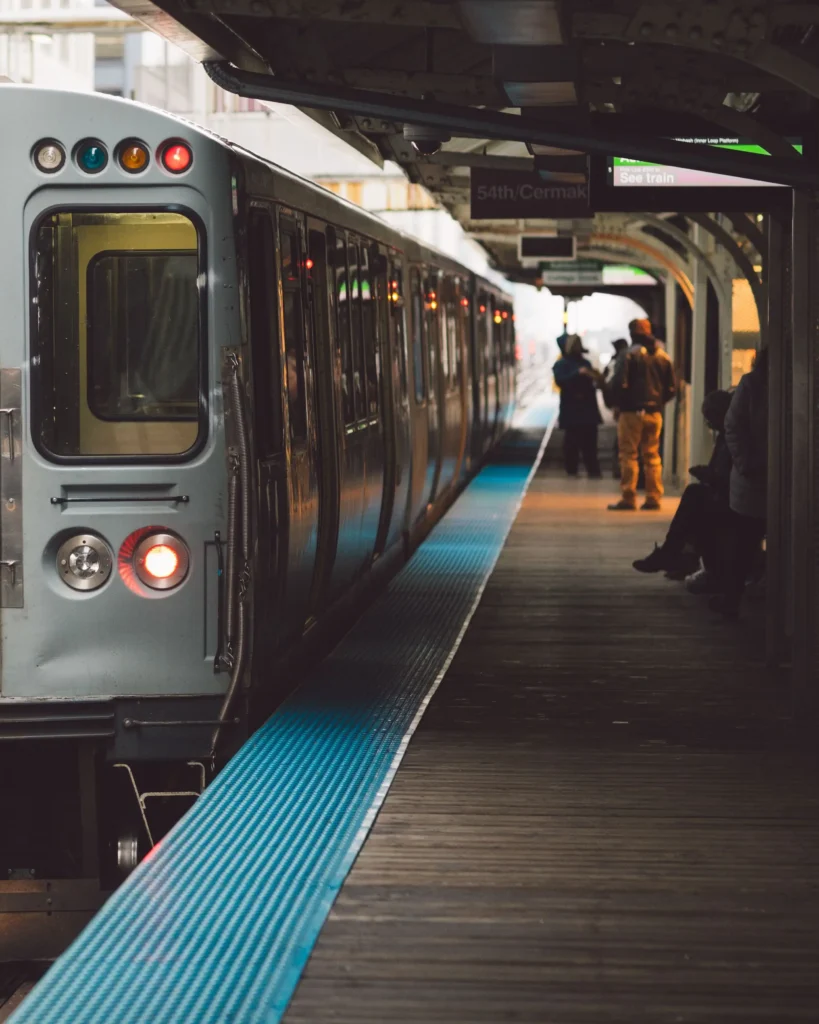
Railroad platforms and stations are supposed to be the “safe” side of the operation the place where passengers board and employees report for duty. In reality, they’re full of hazards: broken or icy platforms, poor lighting, crowding at the edge, unsafe gaps between trains and platforms, malfunctioning doors, and inadequate security.
For workers, those locations are still your “workplace,” and the railroad has a non-delegable duty under FELA to provide a reasonably safe place to work including at stations, customer facilities, and any premises where it sends you as part of your job. For passengers and visitors, railroads and transit agencies owe a high duty of care to keep platforms, stations, and related areas reasonably safe.
When that duty is ignored and someone is seriously injured or killed, we step in to uncover what went wrong and pursue full accountability.

How Much Is Your Case Worth?
Who we represent in platform, station & premises cases
We handle cases involving:
- Railroad employees injured on platforms, in stations, depots, parking lots, walkways, and customer premises while on duty (FELA claims).
- Commuter and intercity passengers hurt while boarding, exiting, or moving through stations, platforms, escalators, elevators, or station-adjacent crossings.
- Contractors and vendors working at stations, on platforms, or in related facilities.
- Families pursuing wrongful death claims after fatal incidents on railroad property.
Whether you slipped on ice on a crowded platform, were struck by a train in a poorly controlled station environment or were injured walking to or from your assignment at a customer facility, we analyze the full chain of responsibility, not just the last person who touched a broom or put up a cone.
Everyday hazards with catastrophic consequences
On paper, railroads and transit agencies have detailed rules and maintenance plans for stations and platforms. In practice, serious injuries often trace back to simple, preventable conditions:
- Slips, trips & falls – Wet or icy platforms, snow left uncleared, spilled liquids, oil or grease, cracked or heaved concrete, loose tiles, worn yellow edges, and cluttered walkways. Slips, trips and falls are a well-recognized cause of serious injuries in the rail industry, for both workers and the public.
- Dangerous platform edges & gaps – Excessive gaps between train and platform, broken edge boards, misaligned equipment, and lack of clear markings or announcements all of which can lead to falls between the train and platform or onto the tracks.
- Stairs, escalators & elevators – Broken steps, missing handrails, poorly lit stairwells, malfunctioning escalators, and unreliable elevators that cause trips, falls, or trapped passengers.
- Falling objects & overhead hazards – Loose ceiling tiles, light fixtures, signage, or construction materials; falling ice or snow from canopies and overpasses.
- Vehicle & pedestrian conflicts – Poorly designed station drop-offs and parking lots, confusing traffic patterns, and lack of barriers between pedestrians and buses, taxis, or other vehicles.
- Inadequate lighting & visibility – Burned-out lights, dark stairwells, and poorly lit platforms that hide hazards and make it harder for workers and passengers to see edges, steps, or moving trains.
- Security failures and assaults – Inadequate security presence, broken cameras, doors that won’t lock, or failure to address known crime patterns leading to assaults, robberies, and other violent incidents in station areas.
Typical platform, station & premises cases we handle
Icy or wet platform falls
Snow and ice left on platforms, stairs, and walkways; water tracked in without mats; chronic leaks from roofs or pipes that create slick spots — especially in areas where employees and passengers are expected to walk regularly.
Falls between the train and platform
Passengers or workers stepping into a gap that’s too wide, misjudging distance due to poor lighting or crowding, or being jostled at the door; children and elderly passengers are especially vulnerable.
Being struck by a train or moving equipment
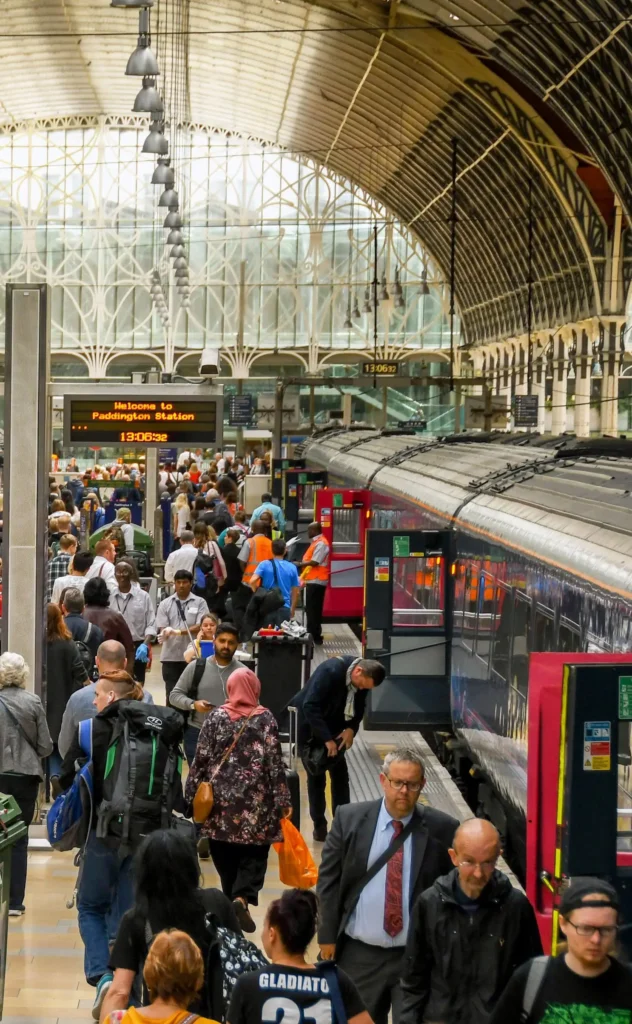
Crowding at the platform edge, lack of markings and audible warnings, trains passing through stations at speed without adequate separation, or employees required to work “in the foul” of tracks within station areas.
Escalator, elevator & stairway incidents
Escalators that stop abruptly or throw riders; elevators that mislevel and create unexpected steps; broken or missing handrails; and poorly maintained stairs that crumble or shift underfoot.
Injuries on customer or connecting premises
Railroad employees hurt at industrial sidings, warehouses, ports, or intermodal facilities where the railroad still has a duty to ensure a reasonably safe work environment, even if it does not own the property.
Assaults and crime on station property
Attacks in dark or poorly monitored areas; repeated incidents at the same station without meaningful security changes; and failure to address known risks from prior crimes.
Workers, passengers & visitors: how liability works
The legal framework depends on your role, but the core idea is the same: those who control the premises must act with reasonable care.
For railroad employees (FELA):
- The railroad must provide a reasonably safe place to work, including safe premises, tools, and equipment, wherever you’re assigned including stations, platforms, yards, customer sites, and more.
- If the railroad’s negligence played any part, however small, in causing your injury, for example, failing to remove ice, repair defects, enforce safety rules, or inspect customer premises, it can be held liable under FELA.
For passengers and visitors:
- Railroads, commuter agencies, and station owners owe a duty to keep platforms, stations, and related areas reasonably safe, to warn of hidden dangers, and to take reasonable steps to prevent foreseeable harm (including crime in some circumstances).
- Claims are typically brought under state premises liability and negligence law, and sometimes under specific statutes governing passenger rail operations.
For contractors and vendors:
Responsibility is often shared between the railroad, the property owner, and the contractor’s own employer, depending on who controlled the work and the condition that caused the injury.age rules depending on the entity involved.
Your rights after a platform, station, or premises injury
Whether you’re a worker or passenger, a few principles apply:
- You can and should prioritize your medical care. Get evaluated promptly and follow up with specialists as needed.
- Be cautious about written or recorded statements. Railroad claim agents and insurers often move quickly to gather statements that minimize their responsibility.
- Document what you can. If possible, take photos of the condition, get names and contact details for witnesses, and keep copies of incident reports.
- Know that time limits apply. FELA and state-law claims have strict filing deadlines; waiting can jeopardize your rights.
For employees, FELA claims may offer substantially broader recovery than ordinary workers’ compensation, including damages for pain and suffering and full lost earning capacity.
Learn More
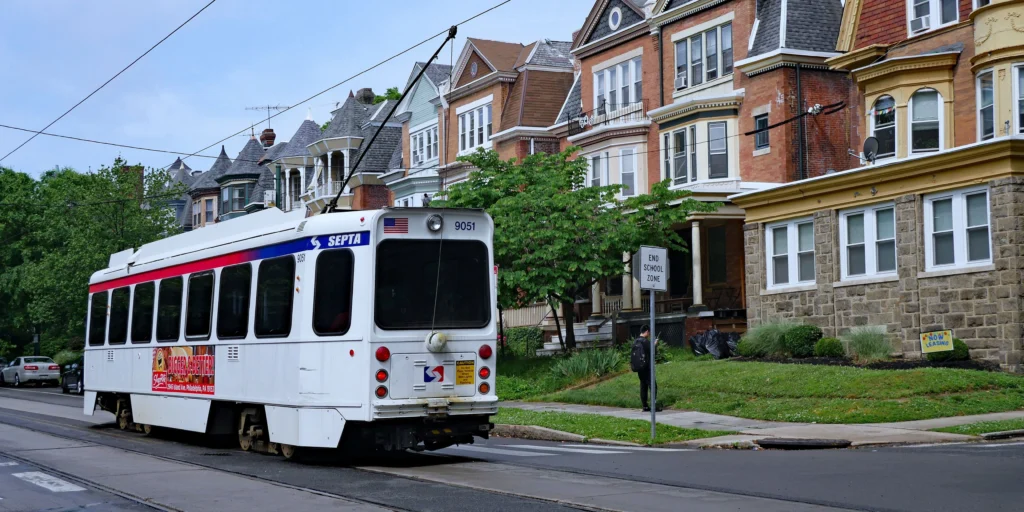
Legal Insight: Defining the Ownership of Tracks in Philadelphia – Where Should I look?
This article was created by the Philadelphia Trial Lawyers Association for The Verdict newsletter in conjunction with Cormick McLaughlin of McEldrew Purtell and is intended to provide legal insight into the ownership of railroad tracks in the Philadelphia area. Finding…
$700,000 FELA Settlement
Colin Haviland and Daniel Purtell settled an FELA case for $700,000 on behalf of a client who suffered severe injuries as a result of his Railroad employer failing to supply the proper equipment to complete his job. McEldrew Purtell’s client…

$885,000 FELA Settlement
Attorney John Coyle settled an FELA case for $885,000 for a union railroad worker, John Felder, who suffered serious injuries on the job, while loading railroad ties. Mr. Felder and a coworker were tasked with moving railroad ties onto a…

$1.6 Million Verdict Against SEPTA
McEldrew Purtell attorney, John Coyle, supported by Associate Attorney, Cormick McLaughlin, secures a $1.6 million verdict in the Philadelphia Court of Common Pleas on a no offer case on behalf of SEPTA conductor, Donnell Shuler in an FELA & Railroad case.…
Everything You Should Know About FELA Claims
As a hardworking railroad employee, you enjoy many exciting career opportunities but are also exposed to alarming risks. It’s common to suffer minor scrapes, but railroad workers are also vulnerable to broken bones, concussions, or even severe burns. Given these…

Elements of a Train Accident Lawsuit
Train accidents can lead to devastating injuries. This catastrophic harm can lead to high medical bills, financial struggles, and severe pain. These accidents are often the result of negligence. You could be owed substantial compensation for your injuries if that…