Railroad crossing crash?
We hold railroads and corporations fully accountable.
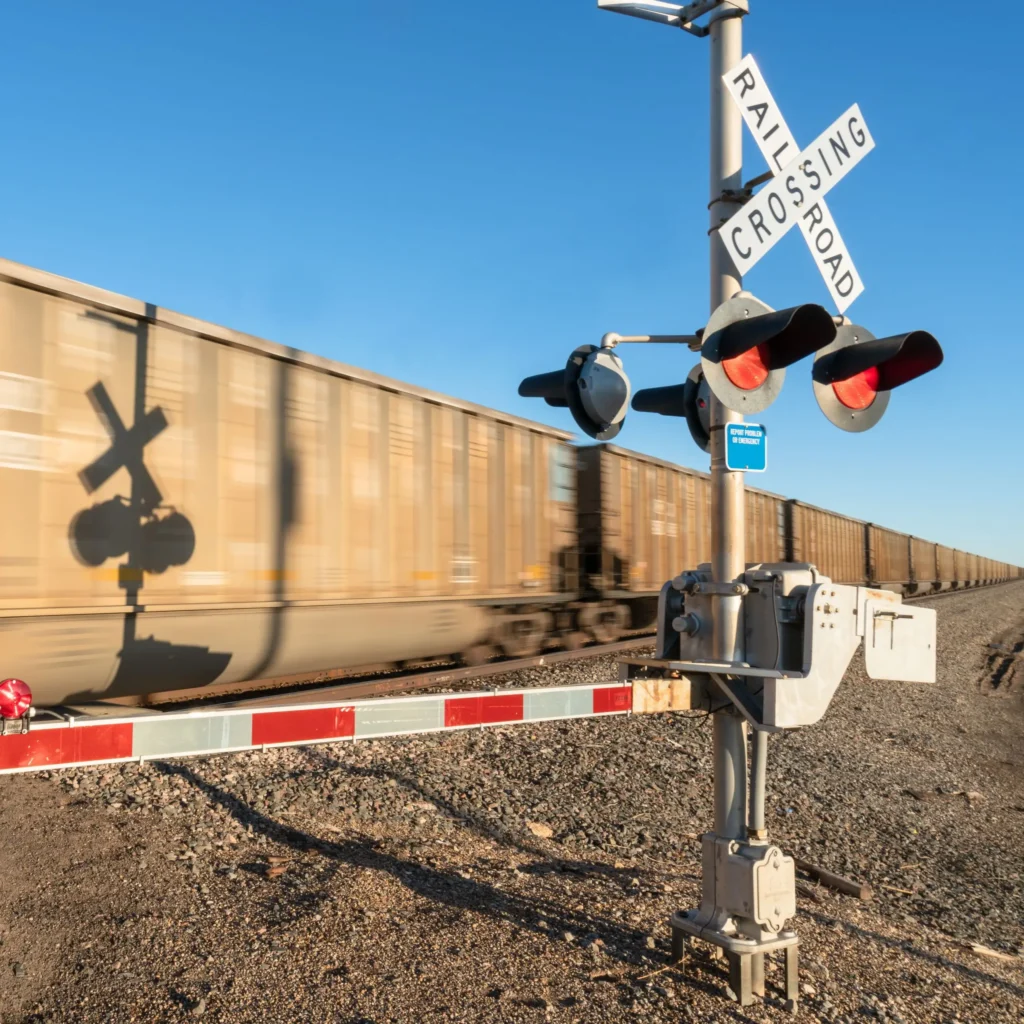
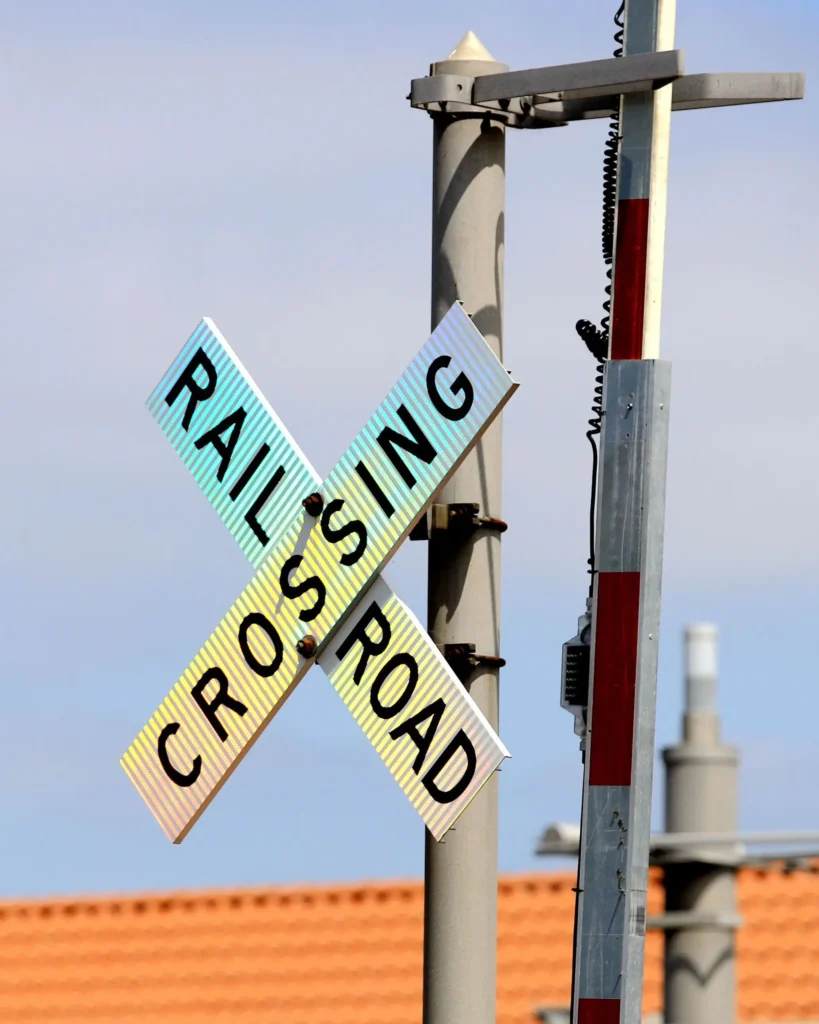
Railroad crossings are supposed to warn and protect the public and rail workers at one of the most dangerous points on the rail line. When a train collides with a car, truck, bus, pedestrian, or roadway worker at a crossing, the results are almost never “minor.” The difference in size, speed, and stopping distance means these crashes often lead to catastrophic injury or wrongful death.
These are not unavoidable “freak accidents.” Defective signals or gates, obstructed sight lines, unsafe crossing design, bad route planning, excessive speed, and railroads ignoring known hazards can all turn a routine trip or a normal shift on the railroad into a disaster.
If you or a family member was hurt at a railroad crossing, or if you are a rail employee injured in a grade-crossing collision, we move fast: secure event-recorder and video data, preserve signal and dispatch records, document conditions on the ground, identify every at-fault company, and build the grade-crossing, FELA, and third-party case that goes far beyond basic insurance payments or workers’ compensation.
How Much Is Your Case Worth?
Why these incidents are so dangerous
Even a slow-moving collision with a train can be devastating. The physics are unforgiving, and the failures often show up only in the final seconds.
Common risk factors include:
- Enormous forces at impact – Trains weigh thousands of tons and require a long distance to stop. When they strike a vehicle, pedestrian, or worker, the energy transfer is extreme, leading to brain and spinal injuries, amputations, crush injuries, and fatalities.
- Limited margin for error – At many crossings, sight lines, curves, or building/vegetation obstructions mean road users or rail crews have only a moment to see and react before impact.
- False sense of security – Drivers, pedestrians, and even crews rely on crossing lights, bells, gates, and horn use. When those systems are missing, defective, improperly timed, or ignored, people are put in the “danger zone” without warning.
- Multi-victim events – School buses, transit buses, passenger vans, and work crews mean a single collision can injure or kill multiple people.
- Hidden systemic failures – The real cause often lies in long-ignored safety studies, deferred crossing upgrades, improper maintenance, or bad policies that only become obvious under investigation.
The outcome is often catastrophic: traumatic brain injury, spinal cord injury, amputations, severe burns, crush injuries, and wrongful death.
Common incidents we see
These are some of the grade-crossing events that frequently lead to serious railroad and public injuries:
- Vehicle vs. train at passive crossings – Crossings with only crossbucks or minimal signage, no flashing lights or gates, and poor visibility. Drivers and pedestrians are left to “judge for themselves” at locations that were never reasonably safe.
- Signalized crossings where warnings fail – Lights that don’t activate, gates that don’t lower or rise too early, bells that malfunction, or improper activation timing. Without reliable warnings, road users are exposed at the worst possible moment.
- Commercial trucks, buses, and high-profile vehicles – Tractor-trailers, low-boys, tankers, dump trucks, school buses, and passenger coaches that get struck at crossings. These cases often involve route planning failures, inadequate training, or ignoring known low-clearance/high-center risks.
- Pedestrian and cyclist strikes – People walking, jogging, using mobility devices, or biking through or near crossings where sight lines are blocked, warnings are confusing or absent, or trains move quietly and quickly.
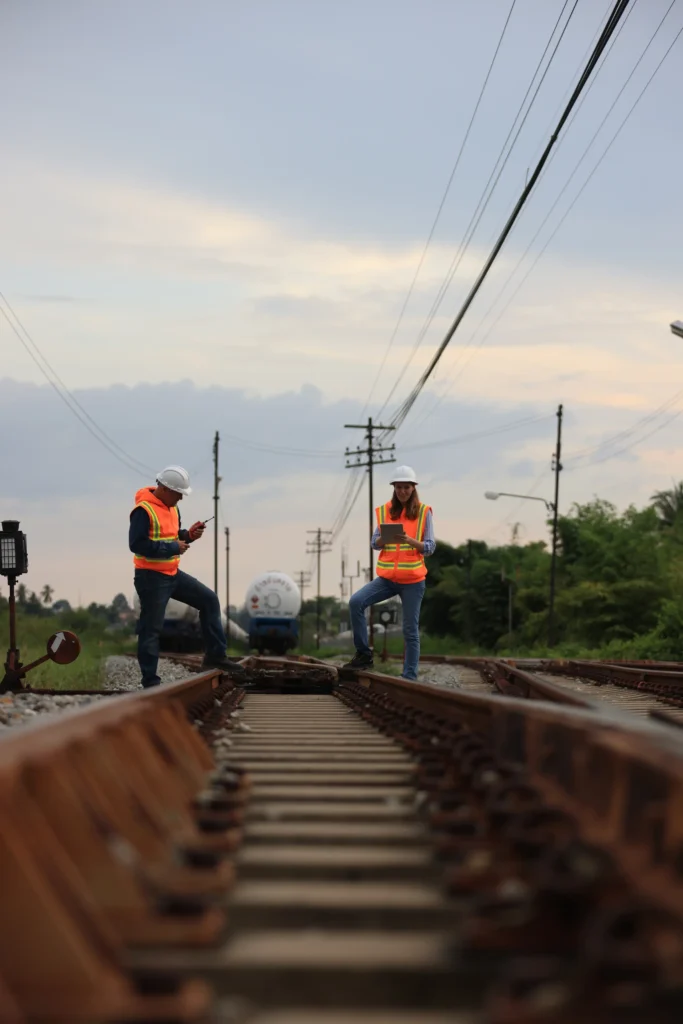
- Roadway and track workers at crossings – Maintenance-of-way employees, flaggers, and construction workers working near or within crossings without proper protection, coordination, or warning systems between work crews and train movements.
- Private, industrial, and plant crossings – Crossings serving factories, warehouses, refineries, or terminals where heavy truck traffic, poor signage, and inadequate communication between facility operators and the railroad create a predictable hazard.
- Multiple-track and “second train coming” events – Incidents where one train passes and obscures the view or sound of a second train, yet the crossing design, warnings, and procedures do not adequately protect against this known danger.
Common crossing and rail safety failures
In these cases, we examine how the crossing and train were designed, built, operated, and maintained, and whether protections were in place for both the public and rail workers. Failures we frequently uncover include:
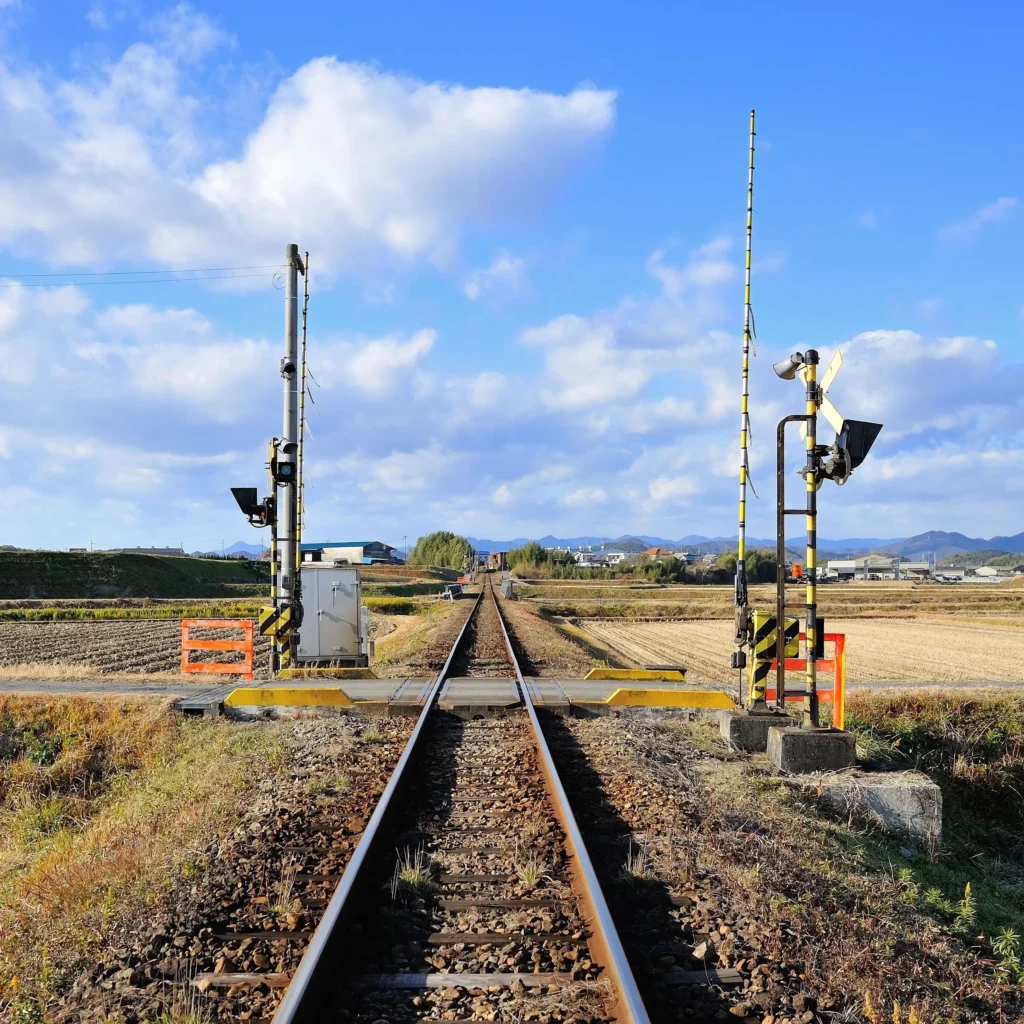
Inadequate or missing active warnings
Lights, bells, and gates not installed despite crash history, high train speeds, heavy traffic, or known sight-line problems; or active systems removed or downgraded to save cost.
Signal malfunction and improper timing
Crossing warning devices that activate too late, not at all, or with inconsistent timing; gates that rise while a train is still occupying the crossing; systems left in disrepair or bypassed instead of being taken out of service safely.
Obstructed sight lines and poor visibility
Vegetation, parked rail cars, buildings, structures, or track curvature that block the view of oncoming trains; faded pavement markings; missing or obscured signage; inadequate lighting for night or bad-weather conditions.
Excessive speed and unsafe train handling
Trains operating above authorized speeds, approaches without proper horn/bell use, or handling that reduces a crew’s ability to stop or slow in time at high-risk crossings.
Hazardous crossing geometry and approach design
Steep grades, “hump” crossings that high-center long vehicles, sharp curves, misaligned approaches, and poor drainage that were never corrected despite complaints or prior incidents.
Known dangerous crossings left uncorrected
Crossings flagged in internal studies, community complaints, or prior incidents for upgrades or closure, but left in service without reasonable mitigation while trains and traffic continue to move through daily.
Third-party & railroad liability
These crashes almost always involve companies and entities beyond a single driver. Serious grade-crossing cases often include:
- Railroad companies operating the train and maintaining the crossing and signal systems
- Track and crossing owners (which may differ from the operating carrier)
- Signal and crossing maintenance contractors responsible for installation, inspection, and repair
- State and local transportation agencies that design roadway approaches, signage, markings, and traffic patterns
- Commercial motor carriers and bus companies that route and train their drivers, including school districts and transit agencies
- Industrial or facility owners controlling private or plant crossings
- Equipment and component manufacturers whose gates, lights, circuitry, or warning devices fail under foreseeable conditions
Our job is to untangle these relationships, identify every viable FELA, third-party, and product liability claim, and pursue the full compensation the law allows.
Grade-crossing patterns we see again and again
In case after case, familiar themes appear:
- Prior near-misses and community complaints that were dismissed or never meaningfully investigated
- Crossings identified for upgrades or closure in safety studies, but funding delayed or projects shelved while trains continued to run
- Vegetation, parked rail cars, or structures that repeatedly blocked views with no sustained correction
- Signals left in service despite chronic problems, nuisance activations, or obvious malfunctions
- Commercial routes that regularly send large trucks or buses across known high-risk crossings without alternative planning
- Rail employees given limited ability to report or correct hazardous crossings along their territory
These failures are preventable with appropriate design, timely upgrades, honest maintenance, and companies willing to prioritize safety over cost and convenience. When they don’t, you should not be the one left paying the price.
Learn More
Legal Insight: Defining the Ownership of Tracks in Philadelphia – Where Should I look?
This article was created by the Philadelphia Trial Lawyers Association for The Verdict newsletter in conjunction with Cormick McLaughlin of McEldrew Purtell and is intended to provide legal insight into the ownership of railroad tracks in the Philadelphia area. Finding…
$700,000 FELA Settlement
Colin Haviland and Daniel Purtell settled an FELA case for $700,000 on behalf of a client who suffered severe injuries as a result of his Railroad employer failing to supply the proper equipment to complete his job. McEldrew Purtell’s client…
$885,000 FELA Settlement
Attorney John Coyle settled an FELA case for $885,000 for a union railroad worker, John Felder, who suffered serious injuries on the job, while loading railroad ties. Mr. Felder and a coworker were tasked with moving railroad ties onto a…
$1.6 Million Verdict Against SEPTA
McEldrew Purtell attorney, John Coyle, supported by Associate Attorney, Cormick McLaughlin, secures a $1.6 million verdict in the Philadelphia Court of Common Pleas on a no offer case on behalf of SEPTA conductor, Donnell Shuler in an FELA & Railroad case.…
Everything You Should Know About FELA Claims
As a hardworking railroad employee, you enjoy many exciting career opportunities but are also exposed to alarming risks. It’s common to suffer minor scrapes, but railroad workers are also vulnerable to broken bones, concussions, or even severe burns. Given these…

Elements of a Train Accident Lawsuit
Train accidents can lead to devastating injuries. This catastrophic harm can lead to high medical bills, financial struggles, and severe pain. These accidents are often the result of negligence. You could be owed substantial compensation for your injuries if that…