
Trapped, pinned, or crushed on a jobsite? We find out why and who’s responsible.
On busy construction and industrial sites, workers move between machines, vehicles, materials, and temporary structures all day long. It only takes a moment for a hand to be pulled into moving parts, a worker to be pinned between a truck and a wall, or a load to shift and crush someone underneath.
These are not “freak accidents.” Caught-in/between and crush injuries usually trace back to preventable failures: unguarded machinery, missing lockout/tagout, blind spots around equipment, poor traffic control, unstable loads, or jobsite layouts that force people into dangerous pinch points. When contractors, site owners, or product manufacturers cut corners, workers and families pay the price.
If you or a loved one suffered a catastrophic injury or wrongful death from being caught, trapped, or crushed on a jobsite, we move quickly to protect you: preserve the equipment and scene, secure witness statements and video, bring in the right experts, identify every responsible company, and pursue the full civil recovery the law allows.

How Much Is Your Case Worth?
Why these incidents are so dangerous
Caught-in/between events combine heavy forces with zero margin for error. A worker often has no warning and no chance to pull away before the damage is done.
- High force, no escape: Once a limb or body is trapped between equipment, materials, or structures, the crushing force builds faster than anyone can react.
- Hidden pinch points: Tight clearances, blind corners, and moving parts create danger zones that aren’t obvious until it’s too late.
- Multiple hazards at once: Many incidents involve more than one mechanism (crush, fall, struck-by, entrapment), making injuries more severe and recovery more complicated.
The result is often catastrophic: crush injuries, amputations, compartment syndrome, fractures, internal organ damage, spinal cord and brain injuries, and wrongful death.
Common accidents & injuries
These are the caught-in/between and crush events we see most often. They happen in seconds and cause life-changing harm.
Pinned between vehicles and structures
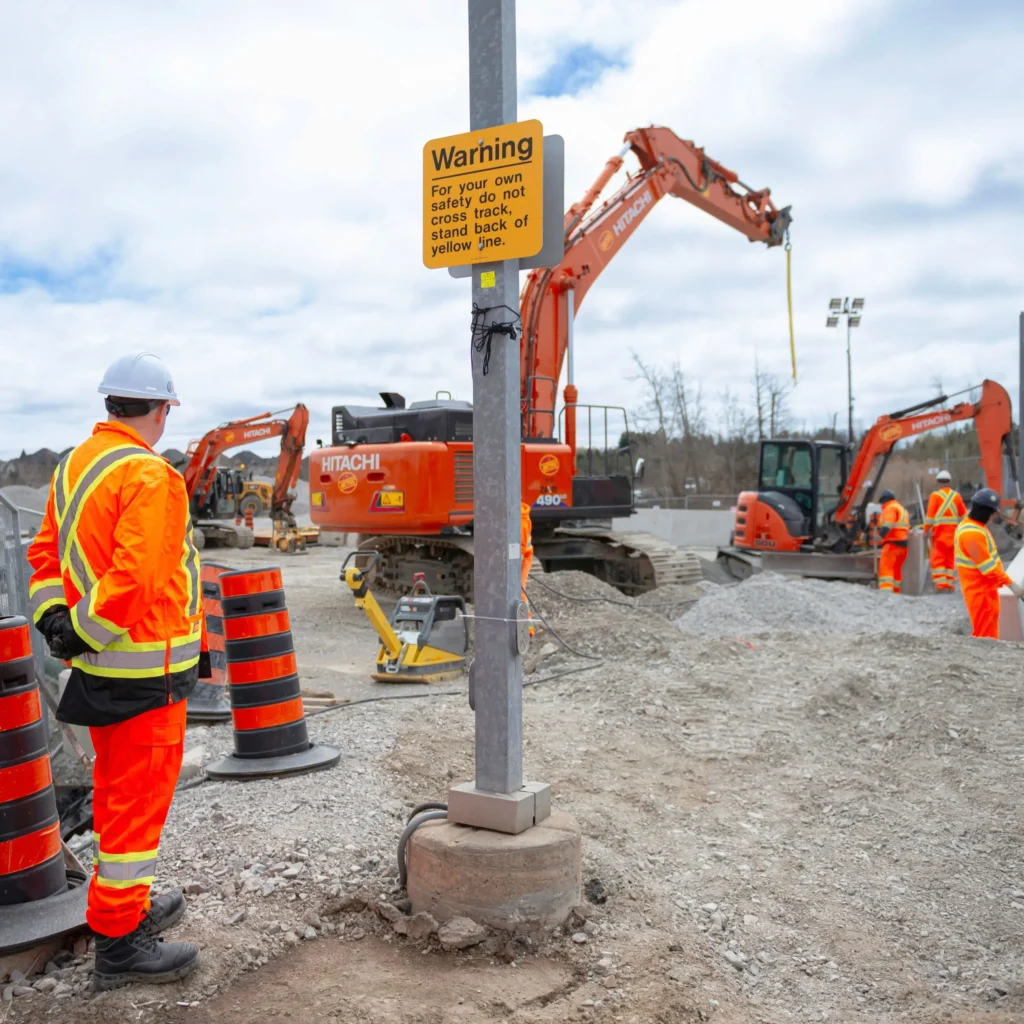
Forklifts, trucks, or heavy equipment backing or swinging in tight spaces, pinning workers against walls, columns, racks, or loading docks.
Machine entrapment and in-running nip points
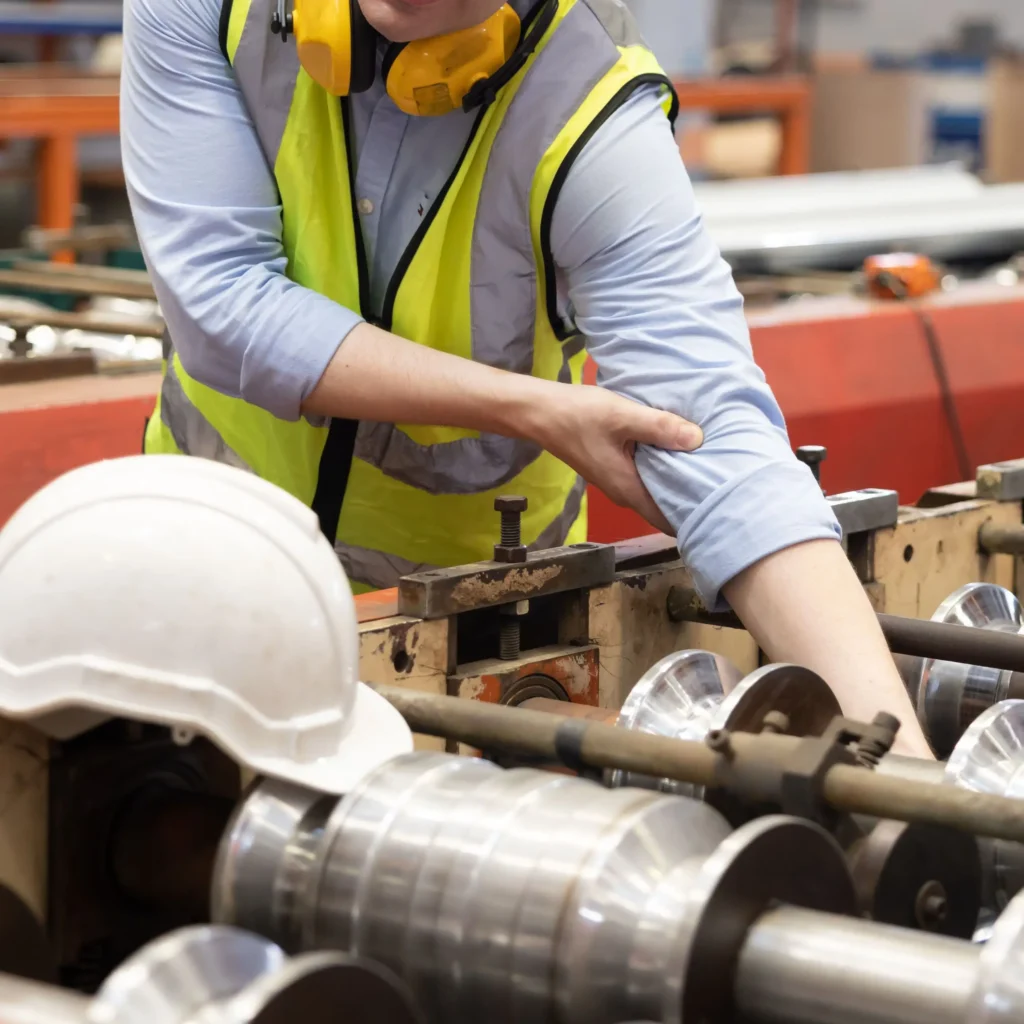
Unguarded rollers, presses, conveyors, and rotating parts pulling in hands, arms, clothing, or hair—often during “quick” adjustments or jam clearing.
Crushed by shifting loads or materials
Bundles of pipe or lumber, steel members, precast panels, or palletized materials that tip, slide, or collapse during staging, hoisting, or unloading.
Caught between suspended loads and fixed objects
Workers crushed between a swinging or lowered load and a structure, truck bed, or equipment due to poor rigging, signaling, or spotter practices.
Trapped in narrow access points
Workers caught between scissor lifts and ceilings or beams, in tight corridors near moving equipment, or between temporary barriers and vehicles.
Collapse-related crush incidents
Trench cave-ins, shoring failures, scaffold or formwork collapses, and partial building failures that bury or compress workers under soil, debris, or structural components.
Your rights after a catastrophic crush injury or wrongful death
You have the right to a jobsite that is reasonably free from known hazards, including pinch points, crush zones, and unstable loads. Basic protections should be in place:
- Guarding and lockout/tagout on hazardous machinery
- Safe traffic patterns, spotters, and warning systems around vehicles and equipment
- Stable stacking, rigging, and load-handling practices
- Clear walkways, access routes, and escape paths
- Training and warnings in a language workers understand
When a property owner, general contractor, subcontractor, equipment manufacturer, or other third party causes or contributes to a catastrophic crush injury or wrongful death, you may have civil claims against those companies for the full extent of the harm not just medical bills, but long-term losses and the impact on your family.

Caught-In/Between & Crush Injuries: Added medical and life impact
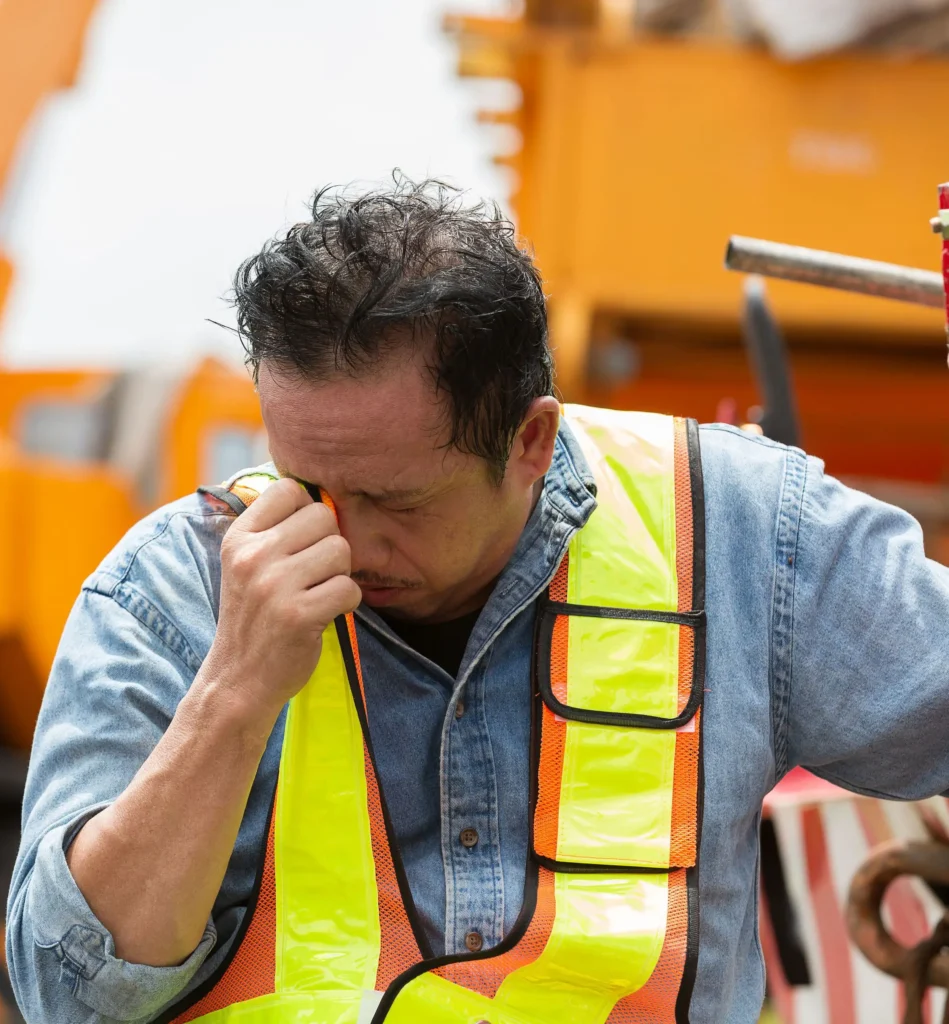
Caught-in/between events often create medical emergencies that evolve quickly and have permanent consequences. We regularly see:
- Severe crush injuries and acute compartment syndrome requiring emergency fasciotomy, repeated surgeries, and prolonged hospitalization
- Delayed internal injuries (organ damage, internal bleeding, rhabdomyolysis, kidney failure) that may not be obvious at first but become life-threatening
- High risk of amputation and permanent disability, especially for hands, arms, legs, and feet
- Complex, lifelong impact involving orthopedic, vascular, and nerve damage, chronic pain, PTSD, and loss of independence or earning capacity
From the beginning, we focus on both liability and your long-term needs working with medical, vocational, and economic experts to document how the injury or loss has changed your life and what you will need moving forward.
Learn More

South Philadelphia Parking Garage Collapse Raises Questions About Premises Liability and Third-Party Worksite Claims
A partial parking garage collapse in South Philadelphia has left one person dead and two others believed to be missing, according to current reporting. The collapse was reported just after 2:00 p.m. on Wednesday, April 8, 2026, on the 3000…
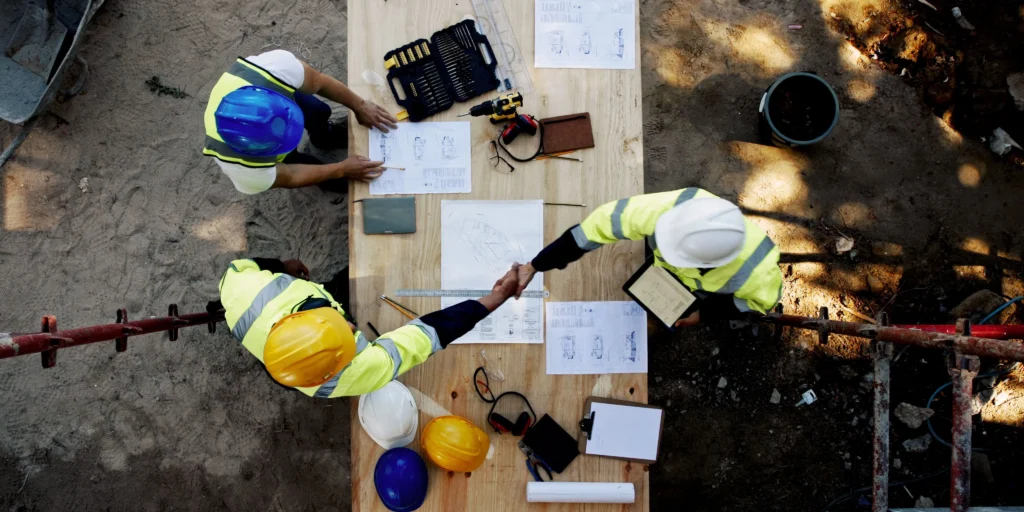
Wrongful Death on a Jobsite: How Third-Party Claims Deliver Beyond Workers’ Comp Death Benefits
Losing a loved one in a workplace incident is devastating. In the immediate aftermath, most families are told, “workers’ comp will handle it.” While workers’ compensation death benefits are important, they are limited by design. In many jobsite tragedies, another…
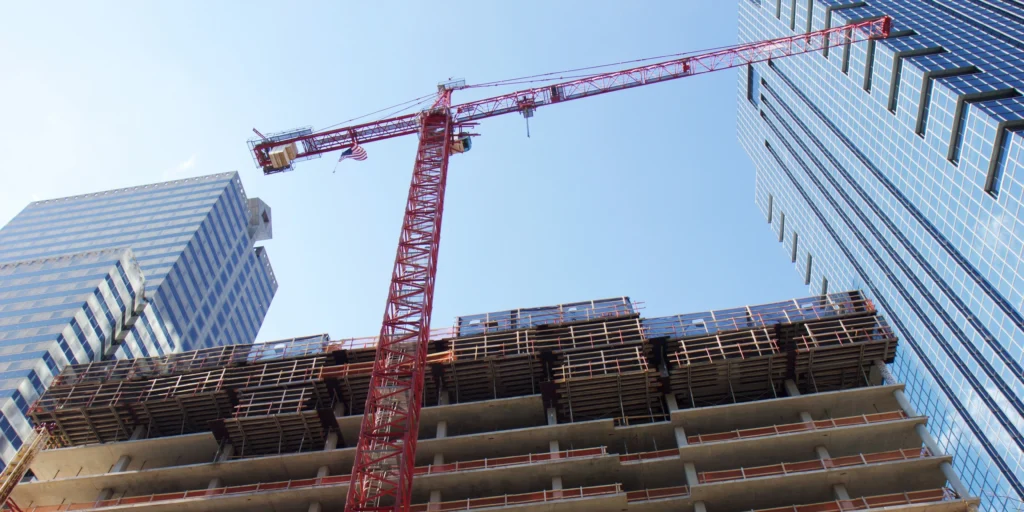
Why Philadelphia Construction Cases Are Different: Union Trades, Dense Sites, and Complex Logistics
Construction in Philadelphia isn’t like construction everywhere else. Union trade structures, tight urban jobsites, and delivery/hoisting logistics create a web of responsibilities that can make or break a construction injury case. If you or a loved one was hurt on…
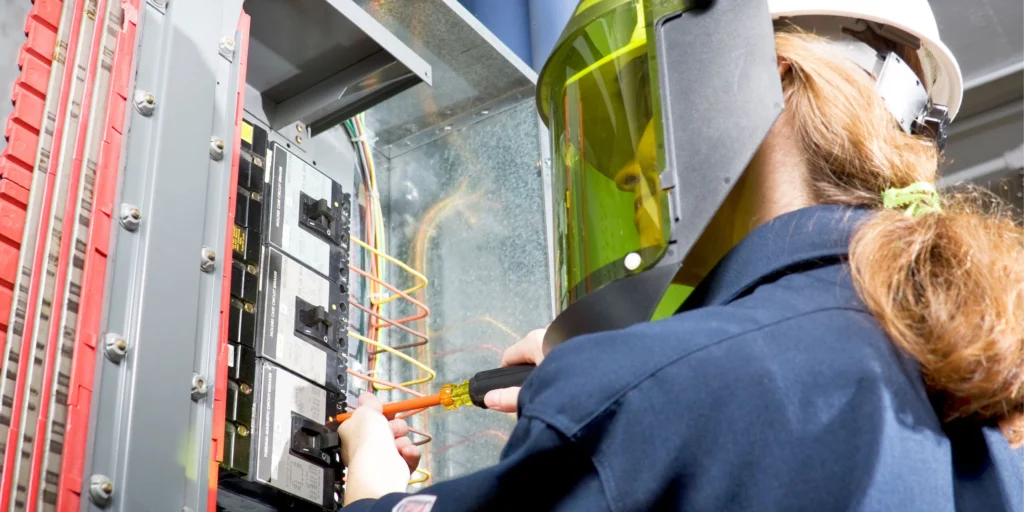
Electrocution & Arc Flash: LOTO, PPE, and Machine Guarding Gaps That Prove Negligence
Electrical work is dangerous when employers cut corners. When a worker suffers an electrocution, shock, or arc-flash burn, the root cause is often simple: the company failed to lock out energy, supply the right protective gear, or guard hazardous machinery.…

Disturbingly High Number of Hostile and Threatening Workplaces
A study of 3,066 U.S. workers found that nearly one in five employees face a hostile or threatening environment at work. The unemployment rate may be at a 16-year low in 2017, but the study indicates everything is not well…