
Legal Insight: Defining the Ownership of Tracks in Philadelphia – Where Should I look?
This article was created by the Philadelphia Trial Lawyers Association for The Verdict newsletter in conjunction with Cormick McLaughlin of McEldrew Purtell and is intended to provide legal insight into the ownership of railroad tracks in the Philadelphia area.
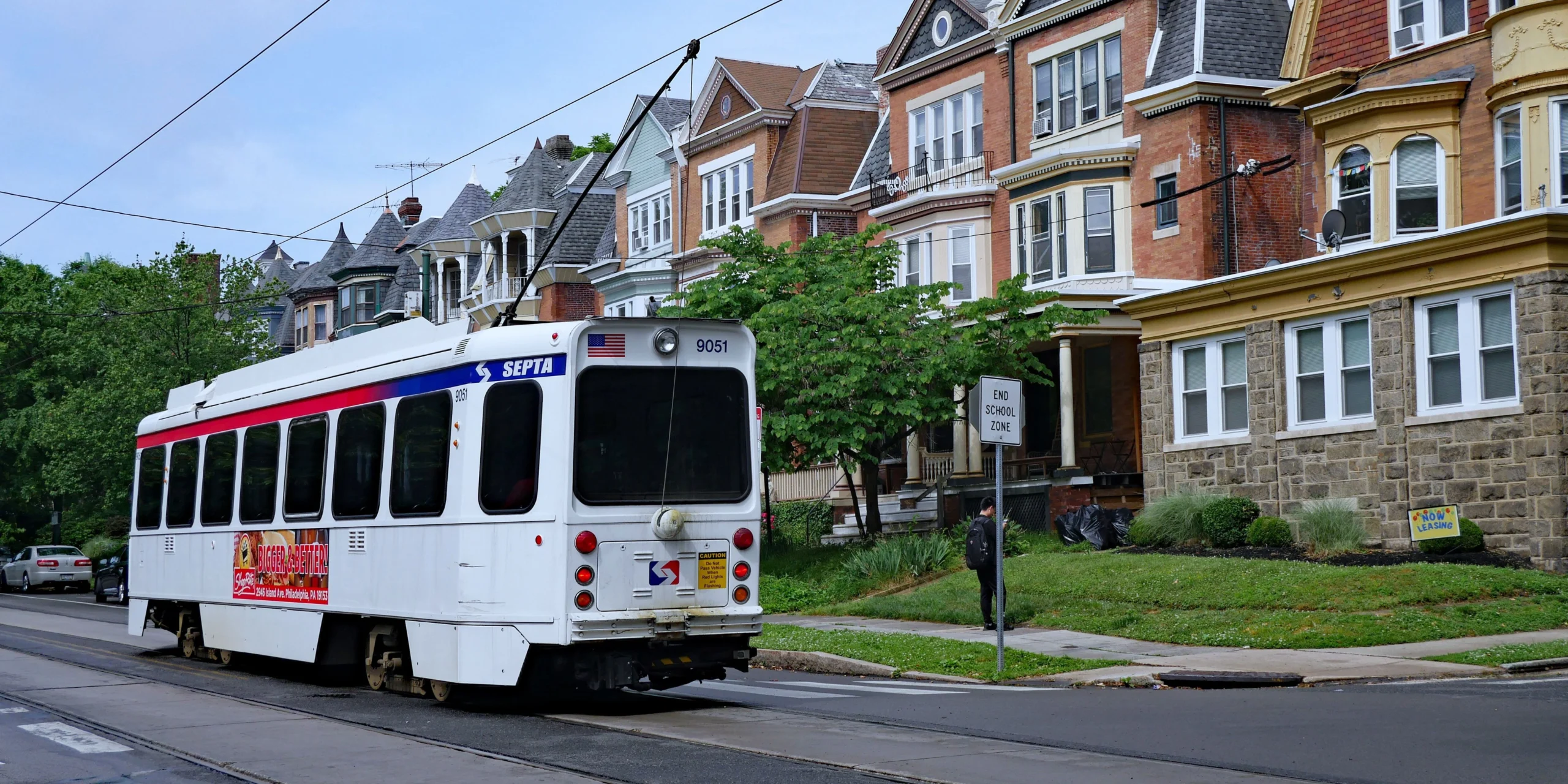
Finding out who owns the property where an injury occurred is an essential first step for an attorney. Ownership can inform who is responsible for maintaining that property and who can be held liable if they are negligent. In Philadelphia and its surrounding suburbs, the Southeastern Pennsylvania Transportation Authority (SEPTA) operates an extensive transportation network including regional rail services, trolley service, and subway service.
Despite SEPTA overseeing the scheduling and maintenance of the trains and trolleys themselves, the ownership of the tracks, surrounding areas, and the maintenance thereof can be a more complicated question. The purpose of this article is to examine who owns Philadelphia’s train and trolley tracks, who is responsible for the maintenance of those tracks and the surrounding areas, and to provide resources that can help you identify those parties.
SEPTA and Its Different Types of Tracks
To get an understanding of who is responsible for the maintenance and care of a section of track and its surrounding area, the first thing we must do is figure out what type of track or surrounding infrastructure our client’s case is concerned with. When it comes to SEPTA operating vehicles on a track in Philadelphia and its surrounding suburbs, there are three categories which for the purposes of this article we will refer to as Trolley Track, Subway Track, and Regional Rail Track.
Trolley Track
Trolley Track is used for streetcar service throughout the city. SEPTA has and continues to provide service on these fixed tracks that operate on the surface of city streets along with motor vehicle, bicycle, and pedestrian traffic. In Philadelphia, Trolley Track presents an interesting problem as there are significant portions where service has been completely abandoned, yet the track itself remains.
In a 1991 case that came to the Commonwealth Court of Pennsylvania for appellate review after arbitration, the Court gave a thorough explanation of who is responsible for the maintenance of Trolley Track and how that came to be. See Yackobovitz v. SEPTA, 139 Pa. Commw. 157, 590 A.2d 40 (1991).
This case began when the Plaintiff fell into a pothole located within eighteen inches of a SEPTA trolley rail on Allegheny Avenue which also happens to be “adopted” as a state highway. Id. at 162. As a result, plaintiff filed suit against both PennDot and SEPTA. PennDot and SEPTA joined the city of Philadelphia as an additional Defendant.
In Yackobovitz the parties stipulated that “the trolley track facilities on Allegheny Avenue where Marie Yackobovitz fell are subject to an Agreement and Lease entered into between SEPTA and the City on September 26, 1968 (Lease), and that this agreement and another agreement (Leaseback) the parties signed at the same time address the issue of “Leased Property” maintenance.” Id. at 162-63. The parties further stipulated that “the controlling legal issue was the determination of who was responsible for the maintenance of the trolley track area, including the trolley rails, the roadbed between the rails, and the roadbed within eighteen inches of the outermost rails on the day Marie Yackobovitz complained of her fall.” Id. at 163.
On review, the Yackobovitz Court stated “[I]t has been consistently held that unless altered by contract or ordinance, the entity operating a street railway is obligated to maintain and repair those portions of the streets on which its street railway tracks are located.” Id. at 164; see also Culver v. Lehigh Valley Transport Co., 322 Pa. 503, 507, 186 A.2d 70, 72 (1936). Historically a street railway company is required to maintain the “space between the rails and for eighteen inches on each side of them, in a safe and passable condition and repair as a duty or obligation incident to its operation of the . . . railway line . . .” Id. quoting Township of Horsham v. Public Service Commission, 97 Pa. Superior Ct. 366 (1929). Though this common law interpretation is of some use to those trying to figure out who is responsible for maintenance, in this case the issue became muddled through the contracting done between SEPTA and the City. Id. at 166-168. Ultimately, the court found through interpretation of the agreements between the City and SEPTA, that SEPTA was responsible for the maintenance of the street railway roadbed. Id. at 169.
This case serves to highlight a fact well known to Plaintiff’s attorneys. Who is responsible for maintenance may appear like a straightforward issue, but it is important not to let yourself be blinded by what is in front of you and ask the right questions during the investigation and discovery of a case to protect your client’s interests.
Subway Track
When we are thinking about Subway Track in Philadelphia, we may have to rethink the name. It is well known that Philadelphia has two major subway lines, the Broad Street Line and the Market-Frankford Line, recently redubbed “B” and “L” respectively. The difficulty with deeming them “subways” comes from the significant portions of the Market-Frankford or “L” which are elevated.
Without further digression we can look once again to the Commonwealth Court of Pennsylvania for a thorough examination of the ownership and maintenance responsibilities near subway track in Philadelphia. In Smith v. SEPTA, 707 A.2d 604 (Pa. Commw. Ct. 1998), both the City and SEPTA were appealing the trial court’s denial of their respective post-trial motions. The jury found both SEPTA and the City liable for injuries suffered on the sidewalk outside of a Broad Street Line Station, importantly SEPTA had previously done maintenance work on this sidewalk. In its opinion the court examined the bounds of SEPTA’s maintenance responsibility and provides other facts that can help us understand where responsibility for maintenance around SEPTA Subway Track begins and ends.
The Court once again referred to the leasing agreement between the City and SEPTA mentioned in Yackobovitz, supra. The trial court provided the jury with limited portions of the lease agreement between the City and SEPTA, including section 1.12 (requiring SEPTA to maintain the Leased Properties in good and safe operating condition), section 2.01(requiring the City to build Broad Street subway extensions), and section 2.04 (requiring SEPTA to maintain the extensions in first-class physical condition, normal wear and tear excepted.) Smith v. SEPTA at 607. The Smith Court found that the jury was entitled to interpret the lease between SEPTA and the City as assigning SEPTA the responsibility to maintain the sidewalk outside of the Broad Street Line Station. Leading up to this finding the Court mentions other portions of the lease which required the parties to make an inventory of “paid areas for which the operator of the transit system is responsible and free areas for which the City is responsible.” Id. at 608.
This interpretation of the agreements between SEPTA and the City provides Plaintiff’s attorneys with important information on the expansive maintenance responsibilities which SEPTA may have for maintaining the areas around Subway Track. SEPTA’s responsibility can, under the right circumstances, go beyond the stairways leading to their subway stops and the platforms on which people wait for their ride and include the sidewalks leading up to those stairwells or underground entrances. In other words, even if it seems like property that would fall under the City’s maintenance responsibilities, it may be worth the time to include SEPTA if they have a nearby facility.
Regional Rail Track
SEPTA’s Regional Rail is the most expansive of the operations being discussed in this article. The Regional Rail Track covers ground in Philadelphia County, Montgomery County, Delaware County, Bucks County, New Jersey, and Delaware. With the scale of operation, it should be no surprise that who owns the track and is responsible for the maintenance surrounding it is a more complicated question than the prior two sections of this article.
After SEPTA’s establishment they gradually acquired direct ownership of many rail assets from private railroad companies such as The Pennsylvania Railroad and The Reading Railroad. We will not focus on the portions of track that are under SEPTA’s direct ownership as they are the majority. Instead, it is important to know that there are locations on SEPTA’s lines where they are using infrastructure from other private entities such as AMTRAK. In situations where AMTRAK owns the track, such as on SEPTA’s Trenton Line, Paoli/Thorndale Line, and Wilmington/Newark Line, SEPTA leases the track rights or operates through cooperative agreements.
With its large scale and the intricacies of the various agreements SEPTA’s Regional Rail maintains with other rail services providers and governments it is important that Plaintiff’s attorneys make sound discovery requests to examine who is responsible for ownership and maintenance at any given portion of track, station, or parking lot associated with SEPTA’s Regional Rail. Unfortunately, there is no one size fits all when it comes to injuries occurring at or near SEPTA’s Regional Rail. You will need to discover the agreements and dig in to find out who is responsible for the conditions that caused injury to your client.
Where to Look?
The maps SEPTA provides on its website are a valuable resource when a client first calls to inform you that they have been injured at or near a SEPTA station. Once you can establish a location you can rule out some of the intricacies noted above. If the injury occurred near, at, or on Subway or Trolley Tracks you know that the majority of the work will be investigating the current agreements between SEPTA and the municipality. Most likely that municipality will be the City of Philadelphia.
When it comes to regional rail, as noted above, things may get more complex. This is when you may have to dig into federal railroad legislation, the Pennsylvania Public Utility Code, and any shared use agreements governed by the Surface Transportation Board. It may also be necessary to discover documents such as SEPTA’s annual reports along with any contracts or lease agreements which are relevant to the issues in your case.
Armed with the fact that ownership and maintenance of the various tracks that provide transportation throughout the City of Philadelphia and its surrounding suburbs isn’t always a straightforward question, you can confidently ask the right questions and look in the right places during discovery. Doing this will ensure that your client’s rights are protected, and responsible parties are held accountable.