

When a tire fails at speed, the consequences can be catastrophic.
A defective tire can turn an ordinary drive into a violent, unrecoverable event: loss of control, rollover, ejection, cross-median impacts, multi-vehicle collisions. When the outcome is catastrophic injury or wrongful death, families deserve more than “it was just a blowout.” They deserve answers backed by evidence.
Defective tire cases are often treated like routine crash claims. They shouldn’t be. These cases require immediate preservation of evidence, technical investigation, and a clear understanding of how tire design, manufacturing, and warning decisions can turn an ordinary drive into a life-altering event.

How Much Is Your Case Worth?
The defect patterns we see in catastrophic tire cases
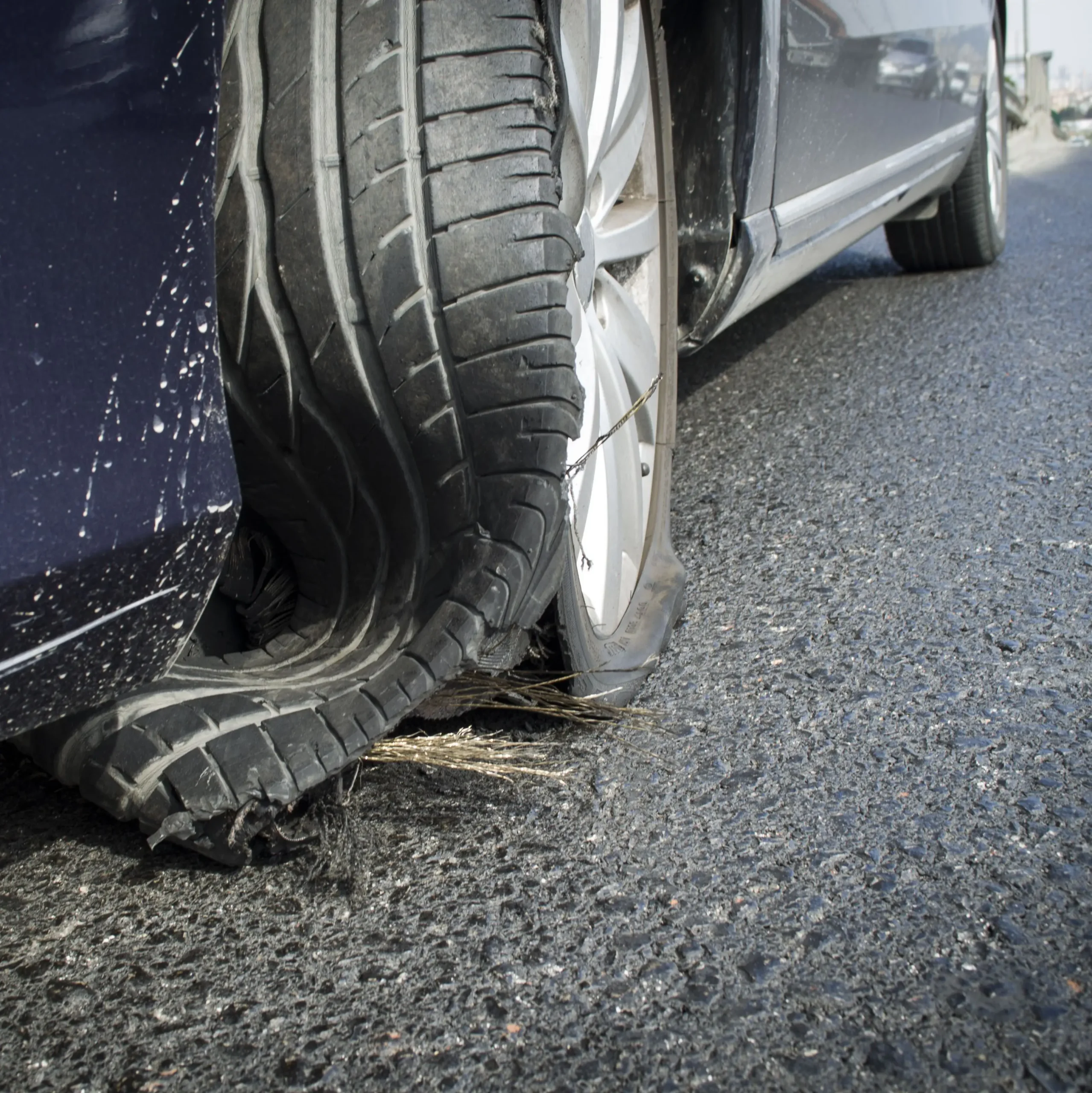
Defective tires don’t always fail with warning. When they do, the “warning” may be subtle vibration, noise, bulging, rapid or uneven wear until the tire finally gives out.
Common failure modes that can lead to catastrophic injury or death include:
- Tread/belt separation: The tread peels away from the tire body, destabilizing the vehicle and increasing crash risk.
- Sidewall carcass breaks with sudden air loss: A rapid deflation can trigger immediate loss of control, especially at speed.
- Improper rubber compounds / poor adhesion: If the wrong compound is used or bonding fails the tread may detach under normal driving loads.
- Defects causing air loss in service: Even without a dramatic “blowout,” progressive or sudden air loss can lead to an unrecoverable event.
Why defective tire claims are different
A catastrophic tire case isn’t built on guesswork. It’s built on proof and that proof can disappear fast if the tire is discarded, repaired, or allowed to weather outdoors.
Key questions a serious investigation focuses on:
- Was this a design defect (the tire’s construction makes failure more likely under foreseeable use)?
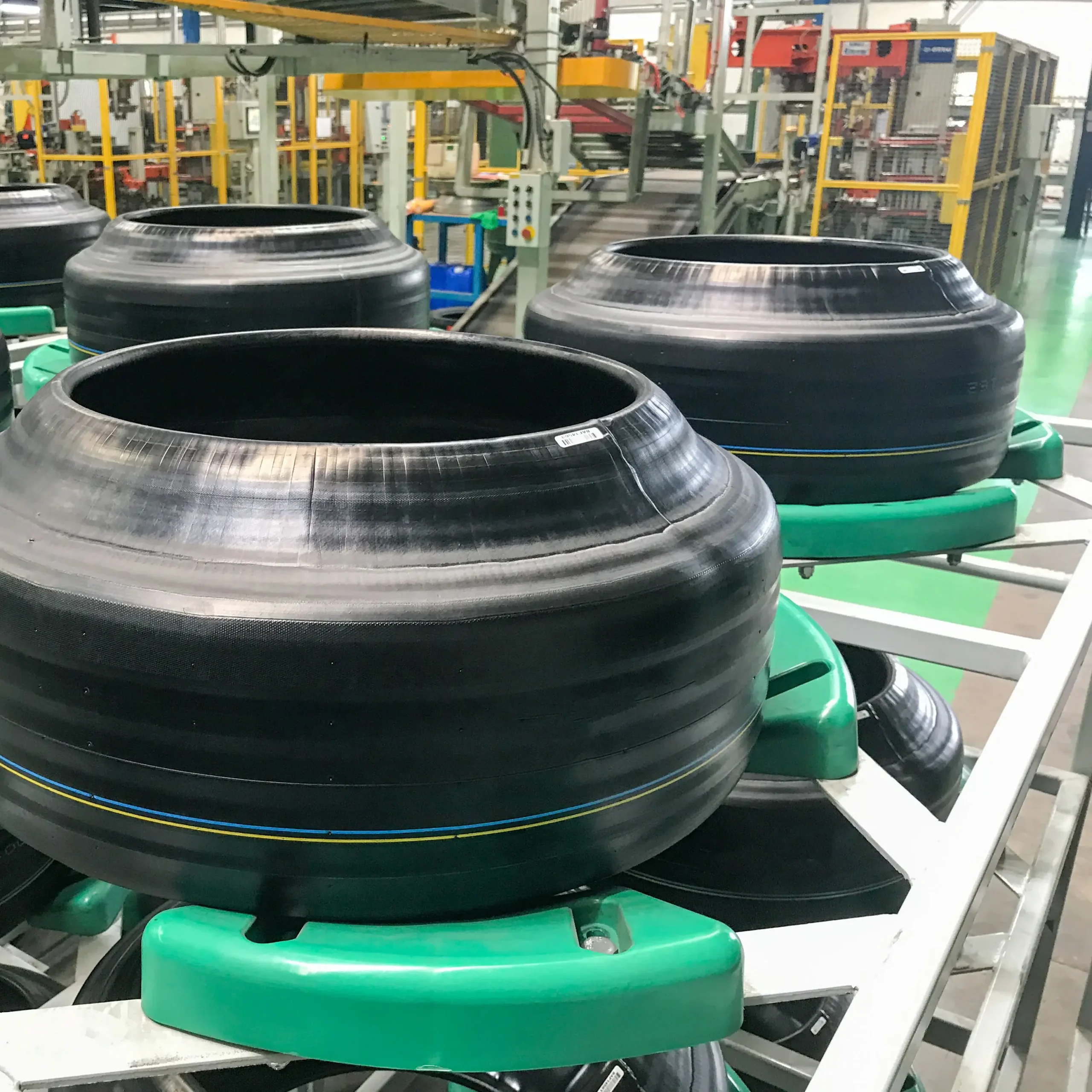
- Was this a manufacturing defect (contamination, curing errors, compound deviations, liner gauge problems)?
- Was there a failure to warn (known risks, known symptoms, insufficient guidance or delayed action)?
- Who placed the tire into the stream of commerce (manufacturer, distributor, retailer, installer, vehicle OEM)?

Recall Radar: Recent Tire Recalls
Recalls matter because they can reveal patterns, specific production weeks, compounds, processes, or tire lines associated with dangerous failures. A recall also isn’t required for a valid claim; many catastrophic failures occur before a recall is announced.
Recent examples:
- Continental Tire the Americas (NHTSA Campaign 25T017): certain Continental and General brand tires recalled because a nonconforming tread base rubber compound may cause tread detachment.
- Continental Tire the Americas (NHTSA Campaign 25T013): recall addressing an overcure/production control issue where affected tires may show warning indicators (like bulging) and include “do not drive/park outside” consumer advisories in the recall documentation.
- Toyo Tire Holdings of Americas (NHTSA Campaign 25T018): certain Toyo and Nitto tires recalled due to a belt manufacturing contamination issue that may reduce adhesion and lead to tread/belt package separation.
- Goodyear (NHTSA Campaign 25T016): Metro Miler G652 tires recalled due to an inner liner gauge condition that can lead to loss of tire pressure and increased crash risk.
- Michelin North America (NHTSA Campaign 25T008): Agilis CrossClimate C-Metric (185/60R15C) tires recalled via a remedy plan distributed to retailers, with recall documentation describing the affected population and replacement process.
Motorhomes and heavy vehicles: the stakes are even higher
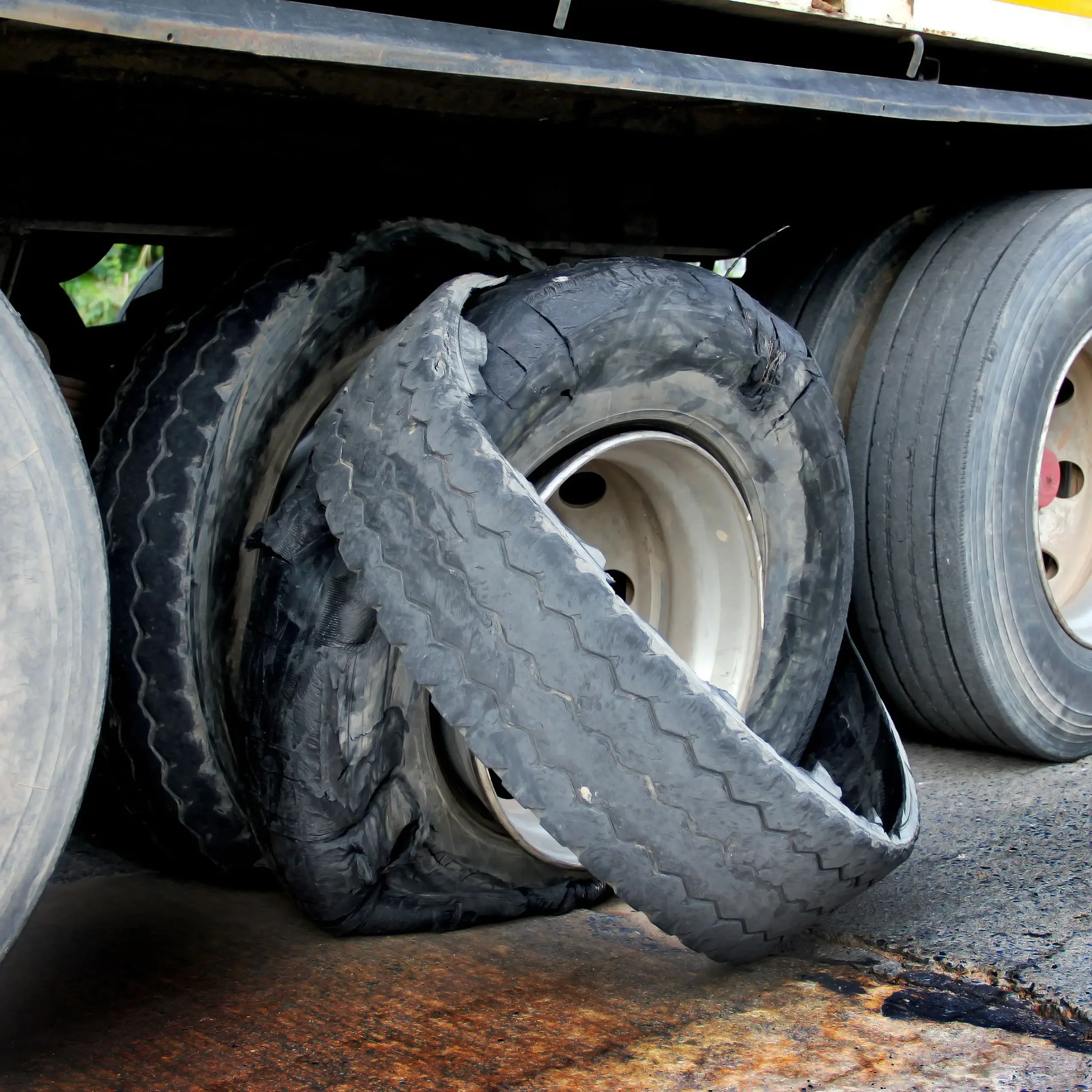
When a tire fails on a passenger car, the vehicle may still be recoverable. When a tire fails on a motorhome or other heavy vehicle, the physics are unforgiving: higher weight, higher center of gravity, long highway runs, and sustained heat buildup can turn a tread separation into an immediate loss-of-control event often ending in rollover, ejection, multi-vehicle impact, or post-crash fire risk.
Why motorhome tire failures are so destructive
- Mass + momentum: A Class A motorhome carries far more weight than a typical vehicle. When a tire lets go, that force can pull the vehicle violently off-line.
- High center of gravity: Rollovers are more likely when a tire failure destabilizes the chassis at speed.
- Heat and sustained highway use: Heat is a major enemy of tire integrity. Long-distance driving at highway speed increases heat and stress, especially if tires are underinflated, overloaded, or aging.
- Aging inventory and “spare tire” risk: RVs may run older tires with plenty of tread left, but age-related degradation can still contribute to failure.

What to do after a suspected tire-failure crash
If you suspect a defective tire contributed to a catastrophic crash, early decisions can protect (or destroy) the evidence:
- Preserve the tire(s) exactly as-is (no repairs, no disposal, no “cleanup” cuts).
- Preserve the wheel and vehicle if possible, tire failure dynamics often show up in the physical damage pattern.
- Photograph DOT/TIN codes and condition immediately (all sides, close-ups of tread/belt area, any bulges, shredding, separation).
- Gather purchase/installation records (retailer invoices, maintenance logs, rotations, pressure checks).
- Avoid letting anyone “inspect and toss” the tire before it’s documented and secured.
Catastrophic harm deserves a product-level investigation
When a tire fails, people don’t just get “hurt.” They suffer brain injuries, spinal cord injuries, amputations, severe orthopedic trauma or families lose someone forever.
If a defect caused (or worsened) a crash, the case shouldn’t be boxed into ordinary auto insurance limits. We investigate tire-failure catastrophes with urgency, preserve the evidence that manufacturers and insurers often overlook, and pursue accountability that matches the scale of what your family is living with.

Learn More

Surgical Stapler Failures: Internal Bleeding, Sepsis, and Wrongful Death
Patients can suffer life-threatening internal bleeding, leaks, infection, or sepsis when a surgical stapler fails to create a complete and secure staple line. These complications may require emergency surgery, prolonged hospitalization, or intensive care, and in the most serious cases…

Pacemaker and ICD Failures: When a Cardiac Device Fails
Patients who rely on a pacemaker or an implantable cardioverter-defibrillator are trusting that device to work. When a pacemaker fails to deliver needed electrical impulses or an ICD fails to detect a dangerous rhythm or deliver an effective shock, the…
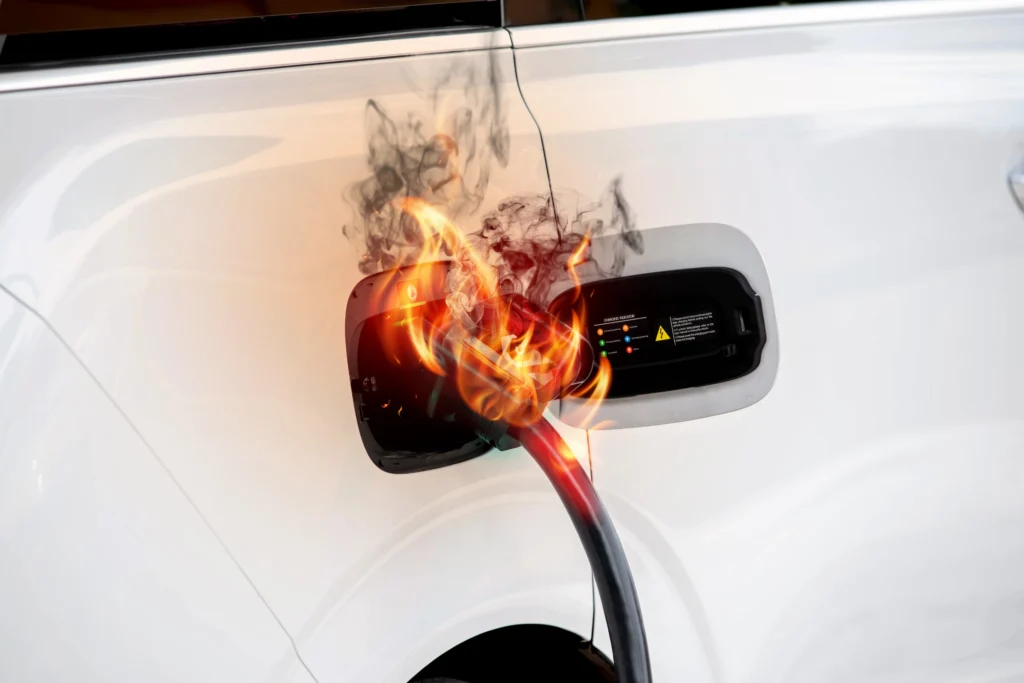
Electric Vehicle Defects: Battery Fires, Severe Burns, and Explosions
Drivers and passengers can suffer severe burns, smoke inhalation, catastrophic injuries, or death when an electric vehicle battery ignites. These fires can happen while a vehicle is charging, parked, operating normally, or damaged in a crash. They can spread rapidly,…

Toxic Exposure Claims: Identifying the Right Liability Theory
Toxic exposures can cause life-altering injuries. The source may be a defective product, an unsafe workplace, a leaking facility, a mislabeled container, or a chemical release that reaches homes, schools, or nearby businesses. The legal claim depends on where the…

Cerebrospinal Fluid Leaks Can Cause Serious Neurologic Injuries and Life-Threatening Infections
When a dural injury results in Cerebrospinal Fluid leak after an epidural injection, lumbar puncture, spinal cord stimulator insertion, spine procedure, or another intervention near the dura, the consequences can be debilitating and life-threatening. Patients may suffer severe migraines, brain…
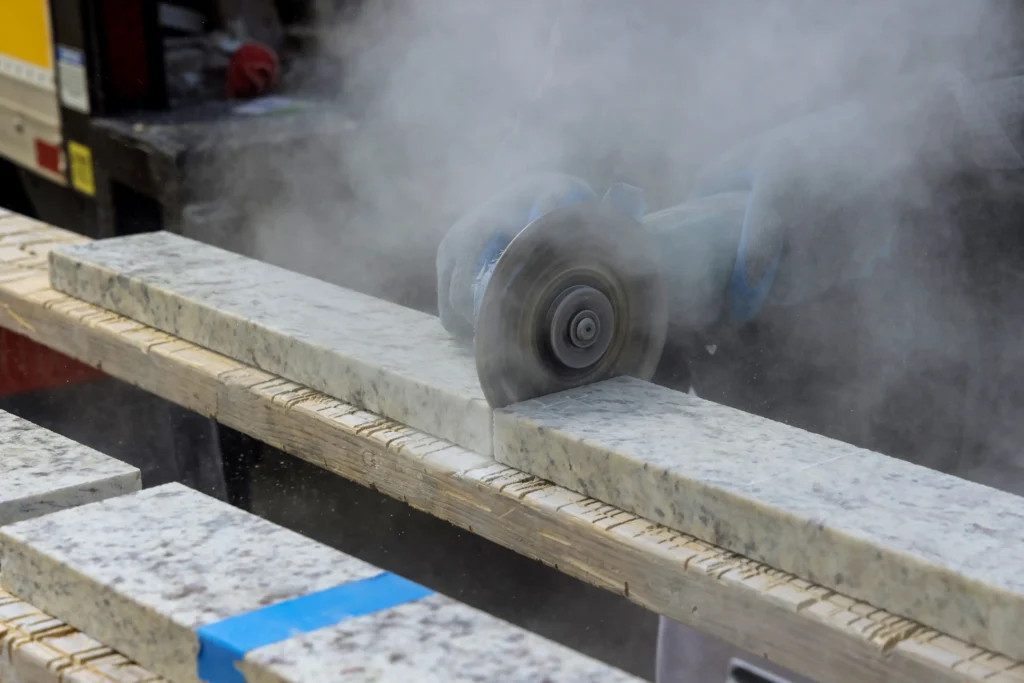
Stoneworkers Face Life-Threatening Silicosis From Quartz Countertop Dust
Stone fabrication workers are losing lung function, undergoing lung transplants, and dying after years of cutting and polishing engineered stone countertops. NPR’s latest reporting adds to growing public health evidence that silicosis tied to quartz countertop dust is appearing across…